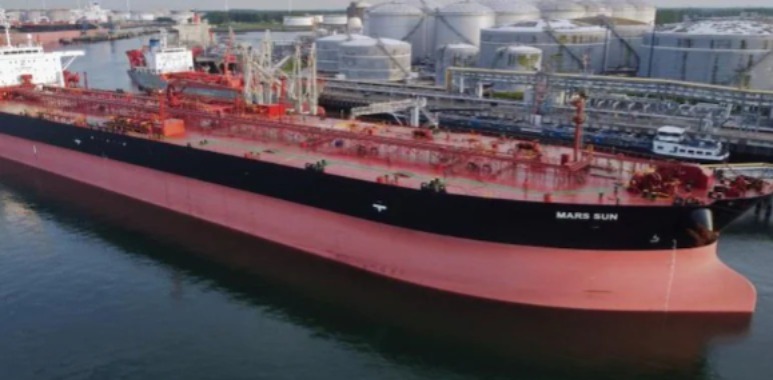
New Delhi: A Russian oil tanker carrying about 7.7 lakh barrels of crude oil is scheduled to arrive in India on March 21 after diverting from its original route to China amid ongoing disruptions in the Middle East.
The vessel, Aqua Titan, which is registered in Cameroon, departed from a Russian port on January 18 and later turned around in the South China Sea before heading toward India. It is expected to dock at the New Mangalore Port, according to officials from the Ministry of Ports, Shipping and Waterways.
The diversion comes at a time when tensions and military activity in West Asia have significantly affected the movement of oil and natural gas from the region. Attacks and retaliatory strikes linked to the ongoing conflict involving the United States, Israel and Iran have disrupted energy supply chains and forced some production shutdowns.
The situation has also affected maritime traffic in the strategically important Strait of Hormuz, through which roughly one fifth of the world’s crude oil supply passes. According to government officials, 22 Indian flagged cargo vessels with 611 seafarers remain stranded in the western sector of the Persian Gulf due to the escalating tensions. Two additional Indian vessels, including an oil tanker, are positioned in the eastern sector of the strait.
Authorities stated that all Indian seafarers in the region remain safe and that no incidents involving Indian ships have been reported recently. Monitoring of the situation is being carried out by the Directorate General of Shipping in coordination with shipowners, recruitment agencies and Indian diplomatic missions abroad.
Globally, around 700 vessels from various countries have reportedly been delayed near the Strait of Hormuz over the past several weeks, affecting energy shipments. As a result, a significant share of crude oil exports from the Middle East has not reached international markets.
For India, which imports nearly 85 percent of its crude oil requirements from dozens of countries, the disruption has added pressure to secure stable energy supplies. Despite the global uncertainty, officials said Indian ports continue to function normally with sufficient storage capacity and no congestion reported.
Sorry, there was a YouTube error.