New Delhi: India has criticised Pakistan’s record on terrorism at the United Nations, arguing that militant groups once supported or tolerated by the Pakistani state have increasingly created security challenges within Pakistan itself.
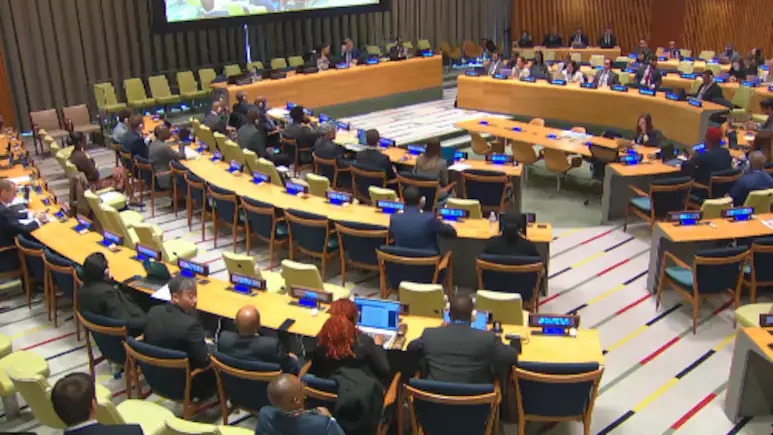
Speaking during a right of reply at the UN General Assembly’s Sixth Committee, Indian diplomat Raghoo Puri rejected Pakistan’s allegations against India and accused Islamabad of attempting to portray itself as both a victim and a frontline force against terrorism.
Puri referred to recent remarks by Pakistan’s Punjab Chief Minister Maryam Nawaz, who highlighted the growing security threat posed by violence within neighbouring Pakistani provinces. He also recalled comments made by former Pakistan Prime Minister Nawaz Sharif in 2018 concerning militant organisations and the 2008 Mumbai attacks.
India also challenged Pakistan’s claims about the outcome of Operation Sindoor, launched following the Pahalgam terror attack. Puri dismissed Islamabad’s portrayal of the military episode as a victory, arguing that damage to Pakistani military infrastructure contradicted those claims.
The Indian diplomat further questioned Pakistan’s handling of Jaish e Mohammed chief Masood Azhar, a UN listed terrorist. He pointed to reports and public statements indicating that Azhar remains active and questioned how Pakistani authorities could claim difficulty in locating him.
Puri also raised concerns over Pakistan’s references to organisations such as Jaish e Mohammed as being inactive, arguing that similar claims had been made previously while militant networks continued to pose security challenges.
India highlighted the attacks of September 11, 2001, the 2008 Mumbai attacks and the 2025 Pahalgam terror attack as examples of the international community’s continuing concerns over terrorism and safe havens.
The Indian delegation also pointed to the issue of terror financing ahead of the upcoming Financial Action Task Force plenary meeting in Paris from October 26 to 30.
Concluding its intervention, India called for stronger international action against states that provide political, financial or operational support to terrorist organisations, stressing that global commitments against terrorism cannot be effective when perpetrators continue to receive safe havens.
Sorry, there was a YouTube error.