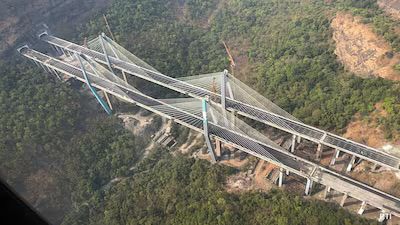
New Delhi: The long-awaited Mumbai-Pune Expressway Missing Link project is set to open on May 1, marking a major milestone in Maharashtra’s infrastructure development. Designed to improve travel efficiency between Mumbai and Pune, the new stretch is expected to significantly reduce both distance and journey time for commuters.
Developed by the Maharashtra State Road Development Corporation, the project has been built at an estimated cost of ₹6,695 crore. The inauguration will be led by Chief Minister Devendra Fadnavis along with Deputy Chief Minister Eknath Shinde. The project is being seen as a landmark achievement in modern road engineering.
Once operational, the Missing Link will shorten the Mumbai-Pune route by approximately 6 kilometers and cut travel time by 20 to 30 minutes. It allows vehicles to bypass the challenging Khandala Ghat section, which is known for sharp curves and accident risks. Authorities estimate that nearly 70 percent of traffic will shift to the new alignment, resulting in smoother flow and reduced fuel consumption.
A standout feature of the project is its advanced engineering design. It includes twin tunnels, with one stretching 8.92 kilometers, making it among the longest in Asia, and another measuring 1.75 kilometers. These tunnels are also among the widest globally, accommodating up to eight lanes and equipped with modern safety systems such as ventilation, lighting, and emergency exits.
The project also features a 650-meter cable-stayed bridge across Tiger Valley, supported by towering pillars reaching up to 184 meters. Built to withstand extreme wind speeds, the bridge is one of the tallest of its kind in India. An additional 850-meter viaduct ensures seamless travel across the rugged terrain.
Connecting Khopoli to Kusgaon near Lonavala, the route enhances access to popular destinations like Lohagad Fort, Visapur Fort, and Karla Caves. Initially, only light vehicles will be permitted, while existing toll charges remain unchanged. The project is expected to improve safety, reduce congestion, and strengthen regional connectivity.