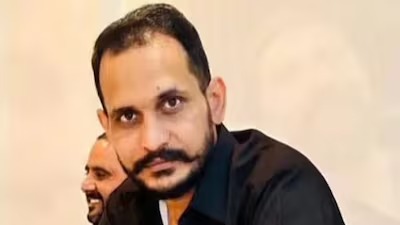
New Delhi: Pakistan based gangster turned terror operative Shahzad Bhatti has publicly challenged India’s claims of a major crackdown against his alleged network, claiming that thousands of his associates remain free despite a nationwide security operation.
Bhatti’s video surfaced days after Union Home Minister Amit Shah said security agencies had dismantled the ISI backed Shahzad Bhatti network through coordinated operations across 14 states. More than 250 people were reportedly detained and over 200 arrests were made, with weapons, explosives and surveillance equipment allegedly recovered during the action.
In the video, Bhatti denies that those arrested were members of his organisation. He claims they were associated with what he calls the Cockroach Janta Party, including individuals linked to protests at Jantar Mantar. He challenges Indian authorities to publicly reveal the identities of the arrested suspects and display the weapons allegedly seized during the operations.
Bhatti also questions the origin of the recovered weapons and claims that nearly 3,000 members of his network remain at large. He further offers legal and financial assistance to people associated with the group he identified as CJP. His claims have not been independently verified.
The video comes at a significant time for investigators who have alleged that Bhatti’s network relies heavily on social media for recruitment, radicalisation and communication. Indian agencies have previously investigated allegations that young people were approached online for propaganda activities and, in some cases, offered money for violent assignments.
Security agencies have also examined alleged Pakistan linked attempts to exploit protests in the national capital. Punjab Police had earlier claimed that an ISI backed module was planning an attack at Jantar Mantar and that some accused individuals had travelled to Delhi during the protests.
Bhatti’s latest message therefore appears aimed not only at disputing the government’s account but also at maintaining his image among supporters and potential recruits. By claiming that thousands of his associates remain free, he appears to be projecting that the network has survived the crackdown.
For Indian security agencies, the development highlights the challenge of tackling the digital infrastructure behind recruitment and radicalisation. Even when physical networks are disrupted, online messaging can allow extremist figures to maintain influence, communicate with supporters and attempt to rebuild their networks.
Sorry, there was a YouTube error.