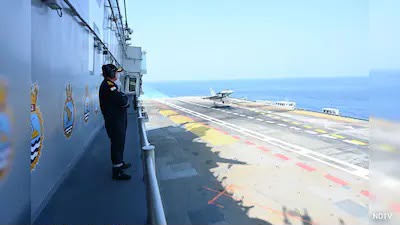
New Delhi: A Rafale Marine fighter aircraft successfully landed on board India’s indigenous aircraft carrier INS Vikrant on October 29 on its maiden attempt, marking a significant milestone in efforts to strengthen the Indian Navy’s carrier based combat capabilities.
The landing took place during ongoing trials aboard INS Vikrant and marked an important step towards operationalising the naval variant of the Rafale fighter jet for Indian Navy operations.
The trials are aimed at evaluating the aircraft’s suitability for carrier operations and completing the modifications required to operate from India’s indigenous aircraft carrier. Earlier testing activities involving the Rafale Marine were conducted in Goa.
India has signed an agreement with France to procure 26 Rafale Marine aircraft, with deliveries expected to be completed by the end of 2028 or early 2029. The acquisition is intended to strengthen the Navy’s air combat capabilities and improve its ability to operate across maritime theatres.
The agreement, signed on April 28, 2025, is valued at approximately Rs 63,000 crore. It includes 22 single seat fighters and four twin seat aircraft, along with pilot training, flight simulators, weapons, essential equipment and long term maintenance support.
Manufactured by French aerospace company Dassault Aviation, the Rafale Marine is specifically designed to operate from aircraft carriers. The aircraft is already in service with the French Navy. India’s acquisition will make the Indian Navy an international operator of the naval variant.
The agreement also includes additional equipment for Rafale aircraft operated by the Indian Air Force. In line with the government’s Aatmanirbhar Bharat initiative, it provides for the transfer of technology to support the integration of indigenous weapons in India.
The Indian Navy currently operates two aircraft carriers, INS Vikrant and INS Vikramaditya. The Rafale Marine fighters are intended to operate from both vessels, strengthening the Navy’s ability to protect its carrier groups and conduct operations over the sea.
The aircraft will undertake a range of missions, including air defence, maritime strikes, reconnaissance and attacks against targets on land. Their induction is expected to enhance the Navy’s ability to counter aerial threats, engage hostile targets and protect India’s maritime interests.
The successful first landing on INS Vikrant represents an important step towards integrating the advanced fighter aircraft into India’s naval aviation capabilities.