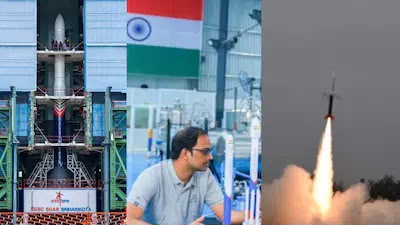
New Delhi: India’s private space sector is preparing for a historic milestone as Hyderabad based startup Skyroot Aerospace gears up to launch Vikram-1, the country’s first privately developed orbital rocket. The launch is expected to take place during a window opening on July 12 and extending until August 4, subject to weather conditions, regulatory approvals and final technical checks.
The fully assembled launch vehicle was recently unveiled at the Satish Dhawan Space Centre, India’s primary spaceport. Standing nearly seven storeys tall, the rocket has been named after Dr Vikram Sarabhai and represents years of technological development by India’s emerging private space industry.
The mission has been named “Aagaman”, a Sanskrit word meaning “arrival”, symbolising the entry of India’s private sector into orbital launch capability on the global stage.
Founded by former ISRO scientists Pawan Kumar Chandana and Naga Bharath Daka, Skyroot has rapidly grown into India’s first space technology unicorn and one of the country’s most closely watched startups.
Vikram-1 has been designed to carry payloads of up to 350 kilograms into low Earth orbit at an altitude of around 450 kilometres. Built using lightweight carbon composite structures, the rocket incorporates several advanced technologies, including in house developed propulsion systems and 3D printed rocket engines aimed at reducing costs and accelerating manufacturing.
The maiden flight will primarily serve as a technology demonstration mission, allowing engineers to collect critical flight data across every phase of the launch, including propulsion performance, guidance systems, stage separation and vehicle behaviour in actual flight conditions.
The mission follows the success of Vikram-S, which became the first privately developed rocket launched from Indian soil in 2022.
If successful, Mission Aagaman will mark a turning point for India’s private space ecosystem, opening the door for domestic companies to play a larger role in commercial launches, satellite deployment and global space services.