Team Goemkarponn
VASCO: The mangled cabin of a heavy fish-export container truck on Goa’s Atal Setu and the diesel spill that brought traffic to a crawl on Wednesday morning have once again highlighted the risks of transporting heavy cargo through the State’s increasingly congested road network.
The accident, which occurred on the night of November 24, could have resulted in a major tragedy. While the driver reportedly escaped before fleeing the scene, the collision left behind damaged road infrastructure, an oil spill and hours of disruption for commuters travelling between Merces and Porvorim.
Beyond the immediate circumstances of the accident lies a larger question that Goa’s seafood exporters and logistics operators need to consider: Why should refrigerated export containers undertake long and potentially hazardous road journeys when container-handling facilities and maritime logistics infrastructure are already available at Mormugao Port?
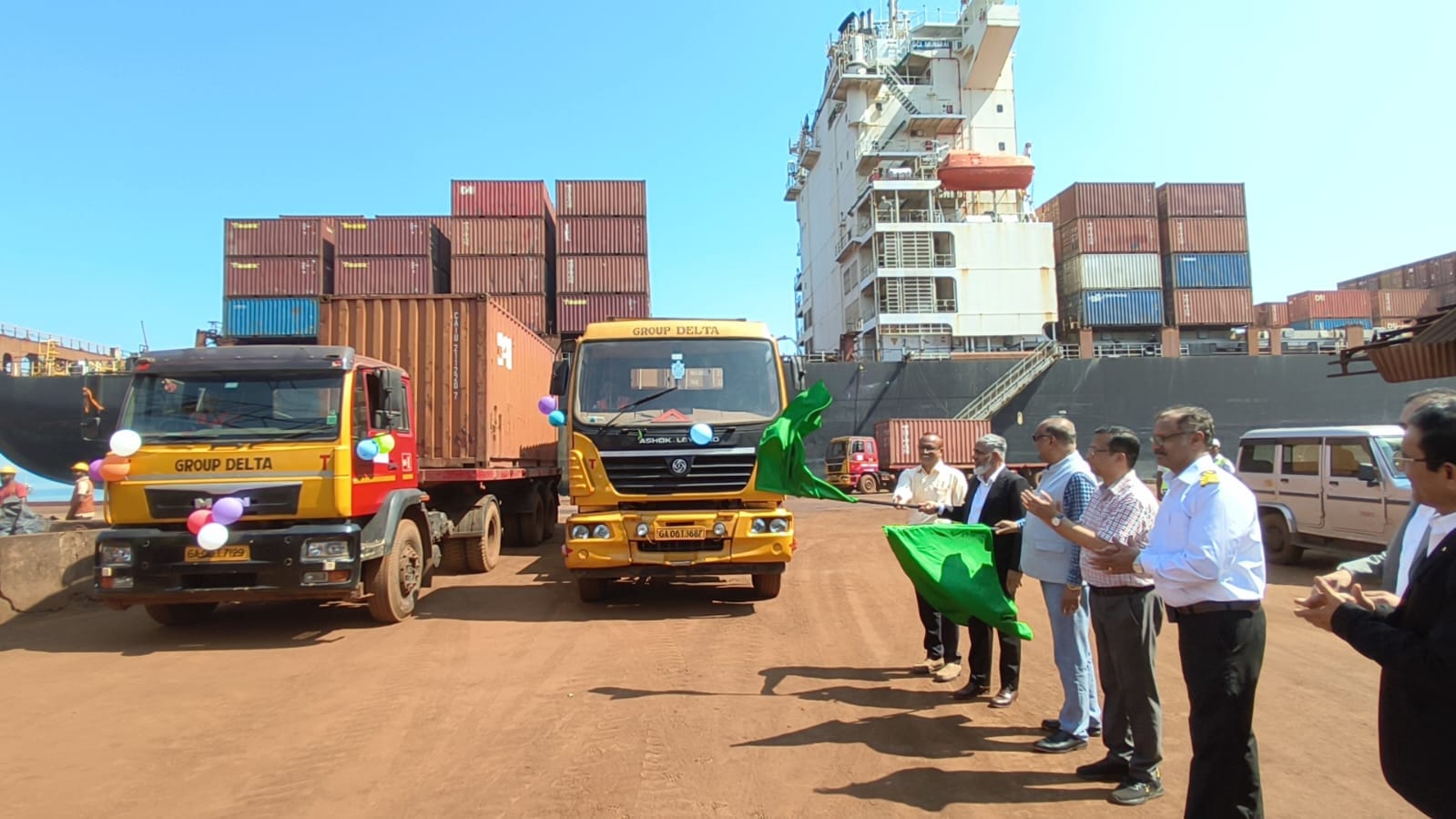
The question assumes significance given that Mormugao Port Authority (MPA) has facilities to handle containerised cargo, with Delta Ports undertaking container operations at the port. Instead of transporting loaded 20-foot and 40-foot refrigerated containers over long distances by road to ports outside Goa for onward shipment, exporters could explore coastal shipping as an alternative.
The existing logistics infrastructure offers an opportunity to rethink how Goa’s seafood exports reach international markets.
### Taking the highway out of the equation
At present, containerised seafood consignments moving by road to major ports outside Goa have to negotiate busy highways, bridges, narrow stretches and traffic bottlenecks. For refrigerated containers carrying perishable seafood, every additional kilometre also means continued dependence on uninterrupted refrigeration, fuel, drivers and road conditions.
Heavy container trucks travelling through congested stretches increase the risk of accidents, traffic disruption and damage to public infrastructure. An accident involving a loaded container can have consequences extending well beyond the vehicle itself, as the Atal Setu incident has demonstrated.
Coastal shipping presents an alternative by transferring the long-distance movement of containers from roads to vessels. Containers can be transported to Mormugao Port, handled at the terminal and loaded onto suitable feeder vessels connecting with larger ports and transshipment hubs along India’s western coastline. From there, the cargo can be connected to onward international shipping services.
### A port facility waiting to be explored
The presence of container-handling operations at Mormugao, including those managed by Delta Ports, provides an important starting point for such an arrangement. Exporters and logistics operators can coordinate with the terminal operator, shipping lines and freight forwarders to explore feeder connectivity, vessel schedules, container handling, customs procedures and refrigerated-container requirements.
Reefer containers require dedicated power connections to maintain prescribed temperatures throughout their stay at the port. The availability and operational capacity of reefer plug-in facilities, along with suitable vessel arrangements, would therefore be crucial in making this movement commercially viable.
The advantages could extend beyond road safety. Coastal shipping can offer economies of scale, potentially reducing per-container transportation costs, fuel consumption and dependence on long-distance trucking. It could also reduce toll expenses, driver-related operational costs and exposure to unpredictable highway delays.
Importantly, this would not eliminate road transportation altogether. Containers would still need to reach Mormugao Port from processing units and export facilities. However, replacing the long-haul road leg with coastal shipping could substantially reduce the distance travelled by heavy container trucks through Goa and neighbouring States.
### An opportunity for Goa’s export sector
The Atal Setu accident should prompt a serious discussion between seafood exporters, logistics companies, shipping operators and MPA. A coordinated assessment of cargo volumes, vessel availability, handling charges, transit schedules and reefer facilities could establish whether regular coastal container movement is commercially feasible.
Goa has a functioning maritime gateway, container-handling infrastructure and an established seafood export sector. Making better use of these facilities could bring the two closer together.
The accident on Atal Setu fortunately did not claim a life. But it has raised a question that cannot be brushed aside: When a sea-based logistics alternative is available at home, does Goa really need to send every export container on a long journey over its highways?