Team Goemkarponn
PANAJI: In a major initiative to improve road safety and strengthen traffic law enforcement, the Directorate of Transport will roll out its Automated Intelligent Traffic Management System (ITMS) across 26 locations in Goa from July 1, 2026.
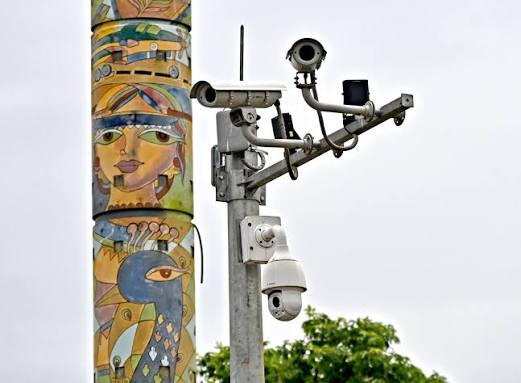
The AI-powered system will be deployed at key junctions and traffic corridors in Panaji, Margao, Nuvem, Verna, Mapusa and Vasco. Equipped with advanced surveillance cameras, the network will automatically detect traffic violations and generate e-challans without the need for manual intervention.
Under the new enforcement framework, motorists caught using mobile phones while driving or indulging in dangerous driving will be fined ₹1,000 for the first offence. Repeat violations will attract a steep penalty of ₹10,000.
The system will also monitor speeding offences, with fines fixed at ₹1,000 for Light Motor Vehicles (LMVs) and ₹2,000 for heavy vehicles. Failure to wear a seat belt or helmet will invite a penalty of ₹1,000.
Authorities have prescribed a ₹10,000 fine for motorists who obstruct emergency vehicles, including ambulances. Other traffic violations such as wrong-side driving, unauthorised parking and the use of fancy number plates will attract a fine of ₹500 for first-time offenders and ₹1,500 for repeat violations.
In addition to financial penalties, the ITMS will facilitate strict action against high-risk offenders. As per directives issued by the Supreme Court Committee on Road Safety (SCCoRS), six major traffic violations captured by the system will result in the automatic suspension of the offender’s driving licence for a minimum period of three months.
These offences include jumping red traffic signals, overspeeding, using a mobile phone while driving, carrying passengers in goods vehicles, overloading commercial vehicles, and driving under the influence of alcohol or drugs.
Transport authorities have urged motorists to familiarise themselves with the new regulations and adopt responsible driving habits before the system becomes operational. Officials believe the technology-driven enforcement mechanism will improve compliance with traffic laws and contribute significantly to reducing road accidents across the state.