Team Goemkarponn
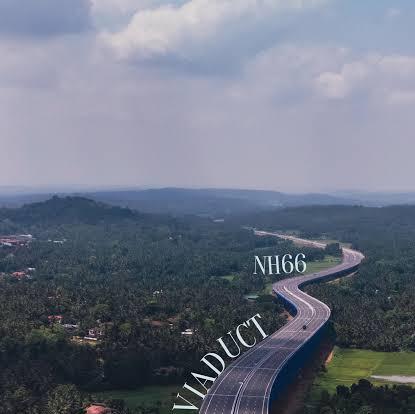
CANACONA: NGO Goenkar and the Shristhal Biodiversity Management Committee (BMC) have welcomed the proposed ₹952-crore four-laning of the NH-66 corridor between Bendordem and Polem, particularly the decision to adopt viaduct technology in the ecologically sensitive Karmalghat stretch.
The project, to be executed under the Hybrid Annuity Model (HAM), was reviewed by authorities earlier this week. Environmental groups, while supporting the highway expansion, reiterated that development should not come at the cost of large-scale ecological damage.
Reacting to reports that as many as 6,500 trees could be affected by the project, NGO Goenkar president Jack Fernandes said the organisation’s primary demand from the outset had been the construction of a viaduct through Karmalghat to reduce environmental impact.
“First and foremost, we welcome the four-lane highway on a viaduct at Karmalghat, which was our main demand from day one,” Fernandes said. He thanked the authorities for considering the NGO’s suggestions aimed at reducing tree felling along the proposed corridor.
Fernandes noted that the organisation would await official details on the exact number of trees proposed to be cut before deciding its future course of action. He pointed out that the High Court, while hearing a petition filed by the NGO, had directed the Regional Empowered Committee (REC), Bengaluru, to inform the petitioners about the number of trees likely to be felled.
“We are not opposing the highway project. However, we will not allow destruction of the environment in the name of development,” Fernandes asserted.
The 22.1-kilometre NH-66 stretch between Bendordem and Polem has been the subject of environmental concerns due to fears of extensive tree loss and its potential impact on biodiversity. Environmental activists had earlier proposed alternatives such as tunnels and viaducts, especially through sensitive forested sections like Karmalghat.
Meanwhile, Shristhal Biodiversity Management Committee chairman Vinay Tubki said authorities had assured stakeholders that the number of trees to be cut would be significantly lower than the figures initially feared.
“Officials have informed us that the number of trees affected will be much lower and certainly not 6,500,” Tubki said.
He added that the committee has demanded compensatory afforestation at a ratio of five trees planted for every tree removed. The BMC has also sought adequate wildlife passages, particularly in the Gulem section, to ensure safe movement of animals across the highway corridor.
The project is expected to improve connectivity in South Goa, while environmental groups continue to monitor its implementation to ensure ecological safeguards are strictly followed.