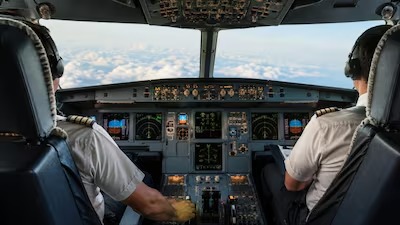
New Delhi: The government is considering a major overhaul of drug testing rules for airline pilots, with a proposal that every pilot could be subjected to at least one random dope test each year.
Civil Aviation Minister Ram Mohan Naidu Kinjarapu said the Directorate General of Civil Aviation is reviewing the existing framework for detecting psychoactive substance use among aviation personnel. Under the current system, only 10 per cent of the overall pilot population is selected for random testing annually.
The proposed approach would ensure that every pilot is tested during the year, while keeping the timing unpredictable. The aim is to strengthen safety standards and create a stricter deterrent against substance use in the aviation sector.
The review comes after an Air India incident earlier this month in which the pilot in command of a Phuket to Delhi flight subsequently tested positive for marijuana. The Airbus A320neo reportedly experienced a sudden loss of around 300 feet in altitude while cruising amid turbulence.
Following the incident, Air India and Air India Express introduced mandatory psychoactive substance testing for their pilots, going beyond the existing minimum regulatory requirement. Around 5,000 pilots across the two airlines were covered under the one time screening exercise. Two pilots initially returned non negative results, with their samples sent for further confirmation.
The Aircraft Accident Investigation Bureau is separately investigating the flight incident. Investigators have possession of the aircraft and its data recorder, with a preliminary report expected at an early stage.
The Federation of Indian Pilots has also called for stronger safeguards. It has proposed increasing annual random testing from 10 per cent to between 20 and 25 per cent, with pilots eligible for repeated selection and tests conducted unpredictably throughout the year.
The pilots’ body has additionally suggested introducing oral fluid testing alongside urine based screening, arguing that it could allow faster testing at airports and other operational locations while reducing disruption to flight operations.
Sorry, there was a YouTube error.