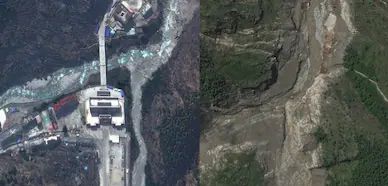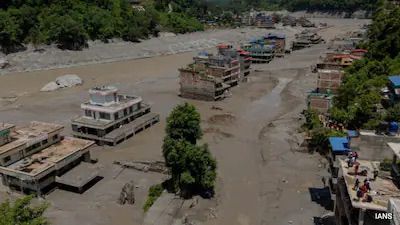
Kathmandu: Authorities have suspended rescue operations near the Nepal China border after a barrier lake on the Tibetan side reportedly breached its banks, triggering fears of renewed flooding in areas already devastated by deadly flash floods.
Nepalese security forces issued an urgent warning to rescue personnel, security teams and residents involved in relief operations, asking them to immediately move to safer locations. The development comes just two days after a massive glacial collapse and flash flood killed at least 469 people and left hundreds missing.
Authorities in Nepal temporarily halted rescue operations for around 90 minutes as water levels in the river began rising. Helicopter missions were also suspended because of the renewed danger. Residents in affected areas were seen moving towards higher ground as officials assessed the situation.
The latest threat emerged after a large barrier lake formed from mud and debris following the earlier disaster near the Gyirong border area in Tibet. The accumulation of water had already raised concerns that another breach could send a powerful surge downstream.
Nepalese authorities said the rising river levels indicated that conditions could deteriorate rapidly, potentially affecting rescuers and communities located along the waterways.
China has also temporarily suspended rescue operations in the affected Tibetan region because of the danger posed by renewed flooding. Rescue teams that had reached areas near the disaster zone were ordered to move back while authorities monitored the situation.
The lake was formed after huge quantities of mud and debris swept through the Gyirong border area following the earlier landslide. The disaster left extensive destruction across the mountainous region, damaging roads, bridges and other infrastructure.
With unstable terrain, continued water flow and the possibility of additional flooding, authorities on both sides of the border are prioritising the safety of rescue personnel. Operations are expected to resume once conditions are considered safe enough for teams to return.
The latest development has added another layer of danger to an already catastrophic disaster, as search teams continue efforts to locate missing people amid difficult Himalayan conditions.