Beijing: India and China have agreed to continue efforts towards a political settlement of their long standing boundary dispute, while emphasising the importance of maintaining peace and tranquillity along the Line of Actual Control for stable bilateral relations.
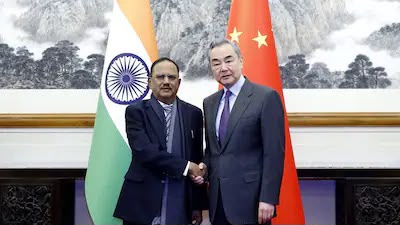
The understanding emerged during National Security Advisor Ajit Doval’s meeting with Chinese Foreign Minister Wang Yi in Beijing. The talks focused on the boundary question, including progress towards delimitation, as well as broader bilateral and transboundary cooperation.
The discussions were held under the Special Representatives mechanism, with Doval and Wang serving as the designated representatives of the two countries. Both sides described the talks as candid and substantive, with the boundary issue discussed in the context of their broader and long term interests.
India stressed that peace and stability along the border are essential for the continued development of bilateral ties. Doval noted that the gradual improvement in relations following the military standoff in eastern Ladakh has been closely linked to both sides maintaining peace in the border areas.
The meeting comes as India and China seek to consolidate the improvement in relations following the tensions triggered by the 2020 Galwan Valley clash. Doval and Wang also reviewed the broader momentum in bilateral engagement and discussed ways to expand cooperation while addressing outstanding differences.
Doval highlighted the resumption of the Kailash Manasarovar Yatra through Nathu La and the revival of traditional border trade through three passes as developments that have benefited communities on both sides, particularly those living near the frontier.
The two sides also exchanged views on regional and international developments of mutual interest.
Wang described India China ties as increasingly important beyond the bilateral sphere, with wider strategic and global implications. He called for stronger communication, greater mutual trust and efforts to overcome obstacles affecting the relationship.
The Special Representatives mechanism was established in 2003 to address the boundary dispute between the two countries, which stretches across approximately 3,488 km. While the mechanism has not resolved the territorial dispute, it remains an important channel for managing tensions and keeping diplomatic engagement active.