New Delhi: India has responded to US Ambassador Sergio Gor’s account of a media interaction involving Prime Minister Narendra Modi and US President Donald Trump, describing discussions about the format of leaders’ public appearances as a normal part of preparations for VVIP visits.
Government sources said arrangements for public appearances are routinely discussed between countries ahead of high level engagements. India maintained that communicating its standard practice for such occasions should not be viewed as an attempt to dictate how another leader interacts with the media.
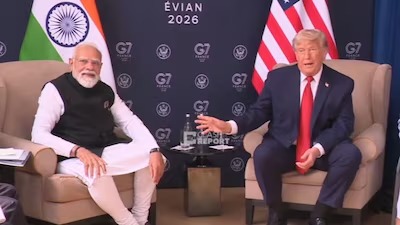
The response followed Gor’s remarks about preparations for a meeting between Modi and Trump. According to Gor, he had discussed the upcoming interaction with Trump and asked what issues India was expected to raise. He said the Indian side had expressed a preference for media access without turning the event into a full press conference.
Gor recalled telling Trump that the Indian side preferred that journalists not ask questions. Trump, according to Gor’s account, agreed to the arrangement.
However, when the meeting began, journalists and around 50 cameras were present. After the two leaders delivered their opening remarks, Trump turned towards the reporters and asked if there were any questions.
The interaction subsequently expanded considerably, with questions being taken on a wide range of issues. Gor described the development as effectively turning the planned appearance into an extended press conference.
The episode attracted attention because Gor’s account appeared to suggest that India had sought to limit questioning during the leaders’ interaction. The government’s response has sought to place the matter within the broader framework of diplomatic protocol.
Preparations for meetings involving heads of government commonly include detailed discussions over media access, statements, seating arrangements, timing and the format of joint appearances.
India’s clarification indicates that communicating a preferred format for such events is considered part of routine diplomatic coordination, rather than an effort to control the substance of a foreign leader’s responses.
Sorry, there was a YouTube error.