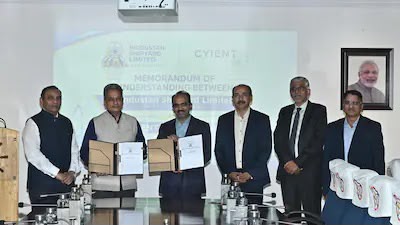
New Delhi: India is taking another major step towards self-reliance in defence manufacturing, with Hindustan Shipyard Limited (HSL) partnering with Cyient DLM to establish a joint venture for designing and manufacturing advanced electronics for Indian Navy warships.
The agreement aims to reduce India’s dependence on imported technology by developing indigenous systems that support navigation, communication, surveillance and fleet operations. Although Indian shipyards have significantly increased domestic warship production in recent years, several critical electronic systems installed onboard continue to come from foreign suppliers.
Under the Memorandum of Understanding (MoU), the two companies will collaborate on a range of naval technologies, including navigation systems, solid-state radars, Electronic Chart Display and Information Systems (ECDIS), autopilots, Global Maritime Distress and Safety Systems (GMDSS), Fleet Broadband and Voyage Data Recorders.
The proposed collaboration will also cover weather reporting systems and helicopter landing aids, strengthening India’s domestic capabilities in advanced maritime technology.
The partnership is expected to increase indigenous content in ships manufactured by HSL while reducing dependence on overseas vendors. It could also improve procurement timelines, strengthen domestic supply chains, lower long-term maintenance costs and make ship repairs and refits more efficient.
The initiative is also expected to create opportunities for Indian micro, small and medium enterprises (MSMEs) and deep-tech companies involved in supplying components to the defence and maritime industries.
HSL Chairman and Managing Director R Adm C Raghuram (Retd) highlighted the importance of incorporating homegrown technology into Indian warships, describing the partnership as a significant step towards Aatmanirbhar Bharat.
Cyient DLM Managing Director and CEO Rajendra Velagapudi said the collaboration would strengthen India’s technological and manufacturing capabilities in the maritime and defence sectors.
The companies will initially identify priority systems and establish joint teams for their design and testing. The equipment will subsequently undergo naval and classification certifications before being deployed on selected platforms.
The first phase will focus on 18 Next Generation Fast Patrol Vessels (NGFPVs).
The agreement supports India’s broader Make in India initiative, extending indigenous manufacturing beyond warship construction to the advanced electronics and integrated systems essential for naval operations.