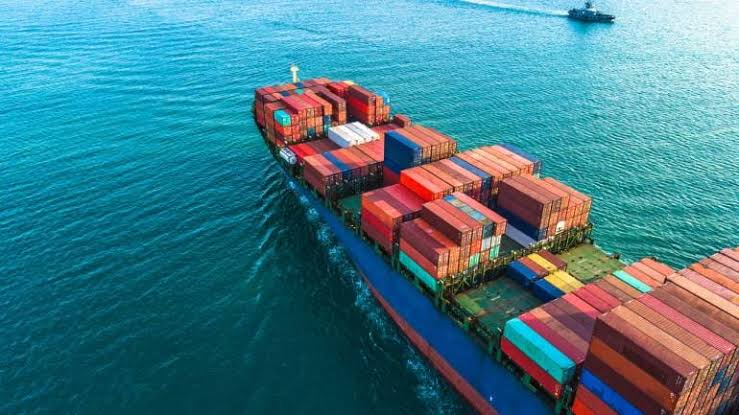
New Delhi: India’s exports to the United States have continued to grow despite tariff-related uncertainty, while stronger shipments to China have failed to narrow the country’s growing trade deficit with its neighbouring economy. The latest trade figures highlight the contrasting challenges facing India’s two major trading partners.
India’s merchandise exports to the US reached $50.81 billion during April to September 2026, compared with $45.73 billion in the corresponding period last year, registering growth of approximately 11.1 per cent.
Meanwhile, India’s exports to China increased 40.7 per cent to $19.26 billion during January to September 2026. However, imports from China rose 23.3 per cent to $125.19 billion, pushing the trade deficit to $105.93 billion, an increase of 20.7 per cent year on year.
The figures show that although Indian businesses are expanding their overseas sales, the country’s trade relationships are producing different outcomes depending on the balance between exports and imports.
The increase in exports to the United States comes amid uncertainty surrounding American tariff policies and ongoing negotiations for a bilateral trade agreement.
The first tranche of the proposed India US trade deal has been finalised and is undergoing legal drafting, with Commerce and Industry Minister Piyush Goyal expressing hope that the agreement will be completed soon.
The proposed arrangement has attracted attention because tariff rates can influence the competitiveness of Indian products against exports from countries such as Vietnam, Bangladesh and Indonesia.
India’s overall merchandise exports reached $259.89 billion during April to September 2026, up 18.51 per cent from $219.30 billion a year earlier. This means exports to the US grew more slowly than India’s total merchandise exports.
Electronics, engineering goods, chemicals and petroleum products have contributed to the broader export expansion. Electronics exports, in particular, have emerged as an important growth area as India seeks to strengthen its position in global manufacturing and supply chains.
However, rising export values alone do not establish how much additional profit Indian businesses are earning. Tariffs, production costs and imported components can affect the benefits exporters ultimately receive.
India’s trade relationship with China presents a different challenge. Although exports to China have recorded strong percentage growth, the country’s import bill remains substantially higher.
China supplies India with electronics, machinery, chemicals and industrial components used in manufacturing, infrastructure development and consumer markets. India exports products including minerals, fuels, seafood and agricultural goods, but these shipments remain considerably smaller in value.
Consequently, even rapid export growth may not be sufficient to offset imports that are several times larger.
India’s trade deficit with China reached $112.6 billion in the 2025 to 2026 financial year, reflecting the structural imbalance between the two countries’ trade flows.
Reducing this gap will require Indian businesses to expand exports in competitive product categories while strengthening domestic manufacturing capabilities.
Economists have highlighted the importance of examining the quality of export growth alongside headline figures. Higher shipments do not automatically translate into proportionately higher profits, domestic value addition or employment.
India’s electronics industry illustrates both the opportunity and the challenge. Increasing exports can generate revenue and support manufacturing, but the long term benefits also depend on how much of a product’s value is created domestically rather than through imported components.
Improving access to export credit, speeding up tax refunds, strengthening logistics and helping businesses meet international standards could improve the competitiveness of Indian products.
At the same time, reducing dependence on Chinese imports does not necessarily require stopping trade. Imported machinery and components can support Indian production, making the development of competitive domestic suppliers a gradual process.
The latest figures underline two priorities for India’s trade strategy: sustaining export growth in major markets such as the United States and improving the balance of trade with China through stronger domestic production and more competitive exports.
Sorry, there was a YouTube error.