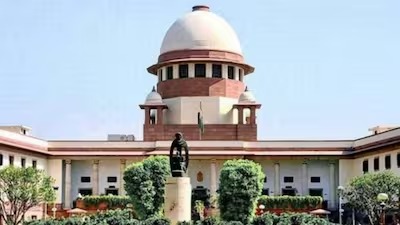
New Delhi: The Supreme Court has held that the right to access and use the internet is protected under Articles 21 and 19(1)(a) of the Constitution, clarifying that children are entitled to the same fundamental protections and cannot be denied internet access altogether.
A bench of Justice JB Pardiwala and Justice K Vinod Chandran said children’s safety and freedom were not mutually exclusive. It observed that completely denying children access to the internet would be as unreasonable as suggesting that their freedom of speech and expression did not deserve protection.
The observations came as the court issued directions to strengthen the detection and removal of child sexual exploitation and abuse material (CSEAM) from social media platforms and other online services.
The bench noted that the right to freedom of speech and expression includes the right to receive, share and access information and ideas. Describing the internet as a marketplace of ideas, information and creative expression, it stressed that its benefits extended to children as well as adults.
The court highlighted the importance of internet access for children in remote areas, where online platforms may be a vital source of education and information. It also noted that the internet could help children with special needs find companionship and connect with others facing similar circumstances.
Acknowledging the risks children face online, the bench said they should not be deprived of internet access because digital platforms had failed to identify and remove harmful content. It warned that blanket restrictions could push children towards unregulated websites and services, potentially exposing them to greater dangers.
The court also expressed concern that strict prohibitions might discourage children facing online threats, grooming or abuse from reporting incidents to parents and trusted adults because they fear punishment for accessing the internet.
While rejecting a blanket ban, the bench said proportionate, age-appropriate safeguards could help protect children online. It suggested measures such as parental consent and supervision, private accounts by default, restrictions on contact from unknown adults and controls on advertisements and content displayed to young users.
The court also referred to the possibility of introducing a dedicated child mode for younger users, with reasonable methods of verifying parental consent. The Union Government was left to determine the details of implementing suitable protections.
The bench cautioned that age-verification systems could raise privacy concerns if platforms were required to collect and continuously monitor sensitive personal information. It clarified, however, that its observations did not prevent the government from restricting children’s access to inherently harmful services, including adult-content websites.
Separately, the Supreme Court directed measures to strengthen efforts to detect and remove child sexual exploitation and abuse material from online platforms.
The proposed measures include creating a comprehensive national database to help identify and remove such material across social media and other online services.
The court’s observations underline the need to balance children’s constitutional freedoms with effective protections against online exploitation, rather than treating internet access itself as the problem.