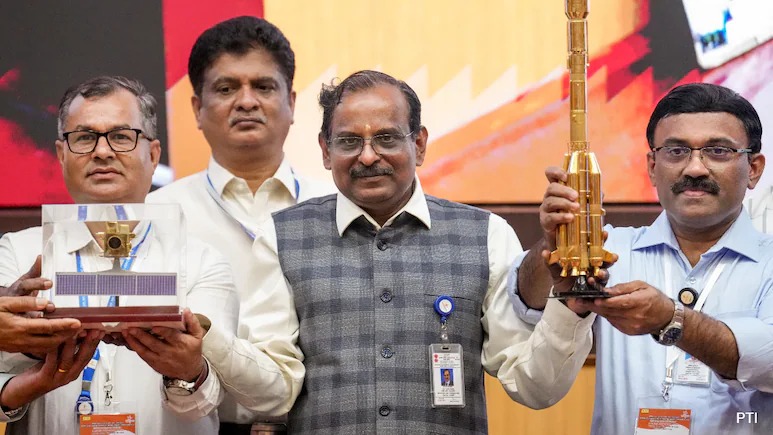
New Delhi: ISRO Chairman Dr V Narayanan has defended the growing participation of private companies in India’s space sector, saying the country’s rapidly increasing requirements cannot be met by ISRO alone.
Narayanan said India currently has around 56 satellites, while the country’s future needs could run into hundreds. He stressed that expanding the broader space ecosystem is essential to meet demand for satellites and related services.
The ISRO chief said the government’s space sector reforms were designed to encourage greater participation from private industry, with ISRO supporting companies and helping develop their capabilities.
According to Narayanan, a larger space ecosystem would not only increase satellite production but also create employment opportunities and contribute to economic growth.
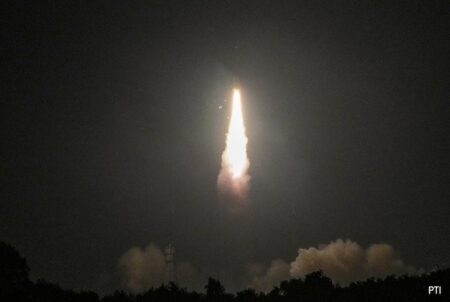
He was speaking after the successful launch of the GSLV F17 rocket carrying the EOS 05 Earth observation satellite. Describing the mission as a proud moment for the country, Narayanan highlighted the increased payload capability of the GSLV Mark II.
He said the rocket’s capacity had risen from 1,536 kg when the programme began to significantly higher levels, with EOS 05 becoming the heaviest satellite launched by the vehicle.
Narayanan also provided updates on two major upcoming programmes. Construction of the Kulasekarapattinam spaceport is progressing according to schedule and is expected to be completed by March.
The Gaganyaan human spaceflight programme is also advancing as planned, with India targeting its first uncrewed mission this year.
The GSLV F17 launch took place at 2:55 am from the Satish Dhawan Space Centre in Sriharikota. The successful mission further highlighted India’s expanding capabilities in Earth observation and launch technology.
Narayanan’s comments underline the government’s broader strategy of combining ISRO’s expertise with private sector capacity to build a larger and more competitive Indian space industry.
Sorry, there was a YouTube error.