New Delhi: India strongly countered Pakistan’s remarks during a United Nations Security Council meeting on Tuesday while pressing for a reassessment of outdated UN mandates and mediation mechanisms that it said no longer reflect present geopolitical realities.
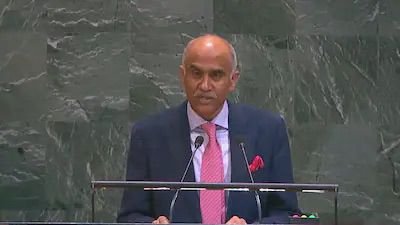
Addressing the Arria formula meeting on the implementation of Security Council resolutions, India’s Permanent Representative to the United Nations, Ambassador Parvathaneni Harish, highlighted the important distinction between resolutions adopted under Chapters VI and VII of the UN Charter.
He explained that resolutions under Chapter VII deal with threats to international peace and security and often involve concrete actions aimed at restoring stability. Failure to implement such measures, he noted, can worsen conflicts and weaken the international rules based order.
In contrast, resolutions under Chapter VI are intended to support the peaceful settlement of disputes through dialogue, negotiation and mediation. India argued that these frameworks are shaped by the political circumstances of their time and should not automatically be considered permanently relevant.
Referring to long standing issues before the Security Council, the Indian envoy pointed out that mediation efforts have evolved over the years to adapt to changing realities, making a strong case for periodic reviews of older mandates and frameworks.
The remarks were seen as particularly significant in the context of Pakistan’s repeated references to decades old UN resolutions on Jammu and Kashmir. India has consistently maintained that such frameworks fail to account for subsequent political developments and bilateral understandings between the two countries.
India also linked the discussion to broader efforts aimed at reforming the United Nations, arguing that Security Council mandates should undergo regular evaluation to ensure they remain effective and relevant.
Responding directly to Pakistan’s intervention during the meeting, India accused Islamabad of politicising the forum and reiterated its longstanding position that Jammu and Kashmir is an integral part of the country and remains strictly an internal matter of India.