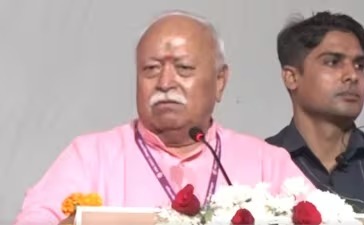
New Delhi: Rashtriya Swayamsevak Sangh chief Mohan Bhagwat on Wednesday said that weak communication within families is a key factor behind what he described as “love jihad,” asserting that any effort to prevent it must begin at home rather than through external measures alone.
Speaking at the Stri Shakti Samvad programme in Bhopal, Bhagwat urged parents to reflect on how a young woman could be influenced by someone outside the family. He emphasised that open dialogue, awareness and moral grounding within households are essential to guide children in making informed choices. According to him, families need to create an environment where concerns and experiences can be freely shared, reducing vulnerability to outside influence.
Highlighting the role of women in shaping society, Bhagwat said the foundational values of a child are formed during the first 12 years of life. He described the mother as the central influence in this formative period, responsible for instilling ethics, discipline and confidence. He also stressed the need for equality between men and women, stating that equal participation and shared responsibility are vital for social balance.
Bhagwat noted that in earlier times, restrictions on women were often imposed due to instability and repeated external threats. He argued that such conditions have largely changed and that society must adapt accordingly, ensuring dignity and equal opportunity for women while maintaining social harmony. He added that preventing what he termed “love jihad” requires coordinated efforts at the family, social and institutional levels to ensure long-term stability.
The remarks triggered sharp political reactions. AIMIM president Asaduddin Owaisi questioned the basis of Bhagwat’s claims, arguing that adults are legally entitled to make their own personal decisions. Speaking in Maharashtra’s Amravati, Owaisi challenged the use of the term itself and demanded clarity and evidence.
He said that if such a phenomenon exists, data should be formally presented in Parliament. Owaisi further criticised the ruling establishment, stating that instead of focusing on contentious narratives, attention should be directed towards pressing national issues such as employment and border concerns.
Sorry, there was a YouTube error.