New Delhi: Nepal has intensified its international response to the devastating flash floods along its Himalayan region, calling for climate compensation rather than treating the disaster solely as a humanitarian crisis. The country argues that it has contributed very little to global emissions but is facing increasingly severe consequences linked to climate change.
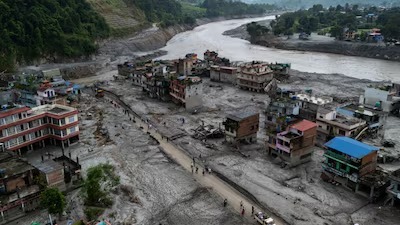
The disaster began on August 26 after a massive collapse of ice and rock near the Nepal Tibet border sent enormous volumes of water into the Bhotekoshi River. Floodwaters tore through downstream settlements, destroying homes, vehicles, roads and bridges while severely damaging hydropower infrastructure.
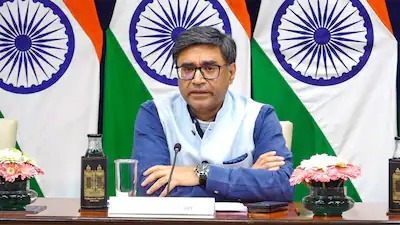
Nepal’s Foreign Minister Shisir Khanal said the country was moving its diplomatic approach from humanitarian aid towards climate justice and compensation. He argued that rapid glacier melting and increasingly extreme mountain disasters demonstrate the disproportionate impact of global warming on vulnerable Himalayan nations.
Kathmandu has specifically pointed to China, the United States and India as the world’s largest industrial emitters and said major economies have a responsibility towards countries facing the effects of climate change. Nepal’s Finance Ministry has reportedly submitted a formal climate compensation claim to international partners and plans to raise the issue at global forums.
Khanal described the disaster as a “Himalayan Tsunami”, citing the extraordinary speed and force of the floodwaters. Nepal has estimated that reconstruction and recovery could cost around $5 billion and has sought financial assistance through international climate disaster mechanisms.
The catastrophe has affected both sides of the Nepal Tibet border. Nepal’s reported death toll has reached 987, while 16 deaths have been reported in Tibet, taking the combined toll above 1,000. Nearly 4,000 people remain missing, although more than 10,000 have been rescued.
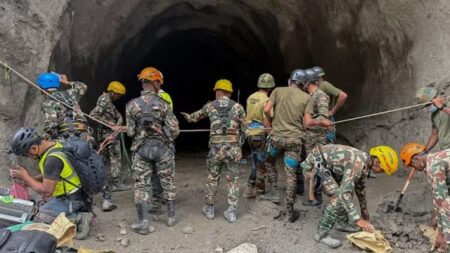
Rescue teams continue to search damaged hydropower facilities and blocked tunnels. India and China are providing technical assistance, while India has separately rescued 158 Indian nationals affected by the disaster.
Sorry, there was a YouTube error.