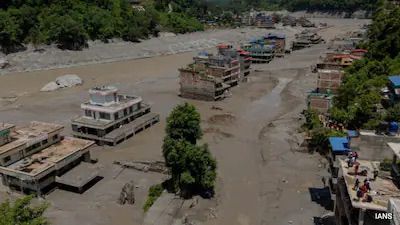
Kathmandu: The death toll from the devastating flash floods that swept through parts of Nepal has risen to at least 469, while around 1,500 people remain missing. Chinese authorities have also reported additional deaths on their side of the border, pushing the combined toll across the affected region to more than 470.
Indians account for the largest group of missing foreign nationals. Data from Nepal’s tourism authorities indicates that 178 Indians are currently unaccounted for, while 11 Indian nationals have been rescued. Several foreign tourists are among those missing, including trekkers in Nepal and Hindu pilgrims travelling towards Mount Kailash in Tibet.
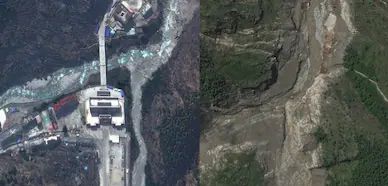
The disaster has caused extensive destruction along the Nepal China border. Satellite imagery indicates that the Rasuwagadhi border crossing between Tibet and Nepal has been completely destroyed, with floodwaters and debris sweeping across the valley.
A new danger has now emerged upstream. Chinese authorities have issued a Level IV emergency alert after a barrier lake formed near the Nepal border following a major landslide. The lake developed near the meeting point of two rivers originating in Tibet and has accumulated an estimated two million cubic metres of water.
With heavy rain continuing, authorities expect the volume to increase significantly. A breach could send a powerful surge downstream, threatening communities and infrastructure near the China Nepal border and areas further into Nepal.
Rescue teams, security personnel and military helicopters are continuing operations in difficult mountainous terrain. Hundreds of people remain displaced as authorities search for those missing.
The Himalayan region is particularly vulnerable to floods and landslides because of its steep terrain, fragile mountain slopes and rapidly changing glacial conditions. Rising temperatures linked to climate change have also increased risks associated with melting glaciers and unstable water bodies.
Nepal has declined offers from several countries to deploy foreign search and rescue teams, maintaining that its own security forces are capable of handling the emergency. The government has instead sought financial assistance through a centralised mechanism, with additional international support expected during the recovery and reconstruction phase.