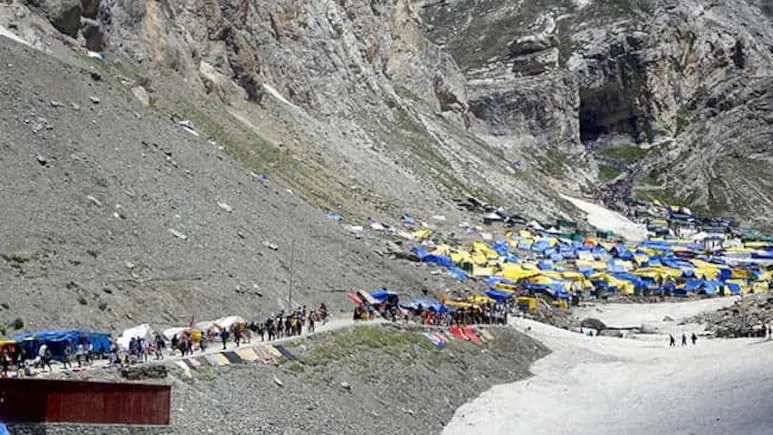
New Delhi: Authorities have rolled out an extensive security framework for this year’s Amarnath Yatra, introducing technology driven measures aimed at preventing impersonation and strengthening safety along the pilgrimage route.
One of the key initiatives is the introduction of tamper proof identity cards embedded with QR codes for all authorised service providers associated with the yatra, including pony operators, palanquin bearers, porters, guides and vendors. Security personnel and pilgrims will be able to scan the cards and instantly access verified details of the individual, helping authorities prevent terrorists or anti social elements from posing as local workers.
To further strengthen verification mechanisms, Jammu and Kashmir Police has launched the Pehchaan mobile application. The app creates a digital database of registered service providers and allows their credentials to be checked in real time. Officials believe the system will help identify unauthorised individuals operating along the pilgrimage route while reducing the risk of impersonation and fraud.
The annual pilgrimage, scheduled to begin on July 3, will be protected by a multi layered security grid involving electronic surveillance, watch towers, vehicle tracking systems and extensive monitoring operations.
Security agencies have also conducted mock drills to test preparedness for possible emergencies, including simulated terror attacks and hostage situations at key locations. The exercises were designed to assess response times and improve coordination between various agencies involved in protecting the yatra.
The Ministry of Home Affairs has deployed 670 companies of Central Armed Police Forces across Jammu and Kashmir for the pilgrimage, working alongside the Indian Army and Jammu and Kashmir Police.
Additional measures include CCTV surveillance, RFID tagging of vehicles and pilgrims, drone monitoring and the declaration of the entire yatra corridor as a no fly zone. Helicopter services for pilgrims will remain suspended for the second consecutive year as authorities prioritise security across the route.
Traffic restrictions and regulated movement schedules have also been introduced to ensure the smooth conduct of one of the country’s largest annual pilgrimages.
Sorry, there was a YouTube error.