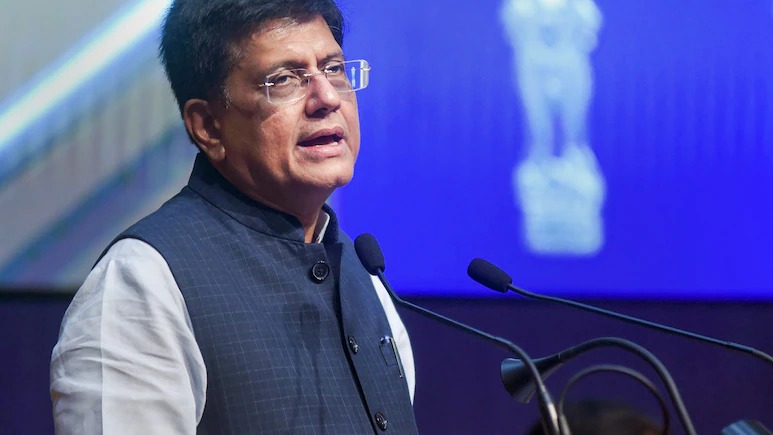
New Delhi: Union Commerce and Industry Minister Piyush Goyal has challenged Europe’s climate policies, arguing that developed economies bear greater responsibility for the climate crisis and should not impose additional financial burdens on developing countries through trade measures.
Speaking during a question and answer session at the Berlin Global Dialogue 2026 on Friday, Goyal questioned the historical contribution of developed nations to global carbon emissions and criticised Europe’s Carbon Border Adjustment Mechanism (CBAM) and high import duties on steel.
During the discussion, Goyal challenged the suggestion that all countries shared equal responsibility for the climate crisis. He pointed to India’s share of the global population, approximately 17 per cent, while highlighting that the country contributes less than 3 per cent of global carbon emissions.
He contrasted India’s contribution with Europe’s historical emissions and argued that developed economies had relied heavily on coal and other energy sources to fuel industrial growth and maintain low energy costs.
Goyal warned that carbon related trade measures and steep steel import duties could increase production expenses, make industries less competitive and push up the cost of living for European consumers.
He also emphasised that India continues to expand its clean energy programme despite economic and developmental challenges, underlining the country’s efforts to pursue growth while addressing environmental concerns.
The minister invoked the principle of common but differentiated responsibilities under the 2015 Paris Agreement, which recognises that countries have different levels of responsibility and capacity in tackling climate change.
He argued that developed nations had committed to providing $100 billion annually in climate finance to support developing countries and vulnerable island nations. However, he expressed dissatisfaction over what he described as the failure to deliver the promised financial assistance.
Goyal is visiting Germany and the Netherlands from October 22 to 27, accompanied by a delegation of around 100 Indian businesses and startups. The visit aims to strengthen economic engagement and explore opportunities for trade and investment.
His remarks highlighted India’s continuing concerns over climate related trade restrictions and the need to balance environmental commitments with economic development and fair international trade.
Sorry, there was a YouTube error.