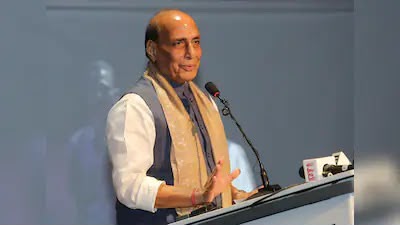
New Delhi: Union Home Minister Amit Shah has outlined an ambitious internal security roadmap for India’s journey towards becoming a developed nation by 2047, stressing that economic and social progress cannot be sustained without a strong security framework.
Addressing the concluding session of the Intelligence Bureau’s National Security Strategy Conference in New Delhi, Shah called for a proactive approach to threats including illegal infiltration, terrorism, narcotics trafficking, cyber risks and radicalisation. He said security agencies must identify emerging challenges well before they develop into major crises.
Shah highlighted what he described as the successful elimination of three major internal security hotspots, crediting coordinated action by state police forces, central agencies and Central Armed Police Forces.
He called for intelligence agencies to look 15 to 20 years ahead and develop strategies based on future security trends. The objective, he said, should be to detect threats early and neutralise them before they become difficult to control.
On border security, Shah said the Centre had consulted states sharing land borders and developed a four pillar framework aimed at strengthening surveillance and preventing illegal infiltration. He declared, “This country is not a Dharamshala and only the citizens of the country have the right to live in this country,” while warning about the security, economic and demographic consequences of illegal infiltration.
The Home Minister also stressed the importance of criminal justice reforms, saying the government is working towards implementing the new criminal laws fully and improving the speed and effectiveness of investigations and trials.
On terrorism, Shah pointed to coordinated action against banned organisations and urged security agencies to turn the PRAHAR strategy into an operational mechanism for dismantling terrorist networks.
He also called for nationwide implementation of the Narcotics Control Vision Document 2026 to 2029, urging agencies to follow a “Detect, Disrupt and Destroy” approach.
Technology, Shah said, will remain central to future policing. Integrated platforms involving CCTNS, ICJS, NATGRID and NAFIS can help agencies combine intelligence, analyse patterns and anticipate threats using artificial intelligence and data driven systems.
He further highlighted efforts to pursue economic offenders abroad and strengthen intelligence sharing through the upgraded Multi Agency Centre.
Shah said global instability, energy insecurity, supply chain disruptions, cyber misinformation and radicalisation will require constant vigilance as India prepares for its 2047 development goal.