NEW YORK: India has called for equal rights and responsibilities for all permanent members of a reformed United Nations Security Council (UNSC), maintaining that if the veto power continues, it must be available to every permanent member of an expanded Council.
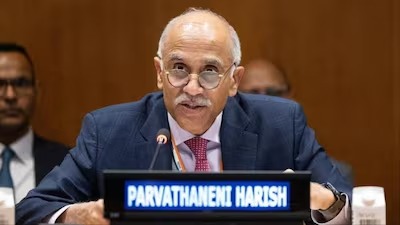
India’s Permanent Representative to the United Nations, Ambassador Parvathaneni Harish, presented the country’s position in New York, opposing proposals to create a separate category of permanent members without equal veto powers.
Harish argued that introducing different categories of permanent membership would complicate the reform process and reinforce existing inequalities within the Council. India’s position also aligns with the Common African Position on Security Council reform.
India called for comprehensive reforms covering five key areas: membership categories, regional representation, the size of the Council, working methods and the veto. Harish stressed that these issues must be addressed together rather than treating veto reform as a separate matter.
He also urged the early commencement of text based negotiations with clearly defined timelines and milestones to accelerate the long pending reform process.
Highlighting concerns over the use of veto powers, Harish said the authority must be exercised responsibly and with restraint, particularly on matters involving international peace and security. He cited the historical use of the veto 331 times on approximately 200 resolutions during the United Nations’ existence.
India also pointed to the 2022 Veto Initiative, which requires a United Nations General Assembly debate whenever a permanent member exercises its veto, as a mechanism to improve accountability.
Harish further raised concerns about what he described as an effective or de facto veto, through which individual Council members can block presidential statements, press statements and sanctions committee decisions under informal consensus based procedures.
India maintained that meaningful UNSC reform must address both the Council’s membership structure and its decision making processes to ensure greater fairness, representation and accountability.
Sorry, there was a YouTube error.