Team Goemkarponn
PANAJI: PANAJI: Two viral videos within a span of a week have rocked Goa, triggering a political storm and raising serious questions about law enforcement, governance, and the state’s image as a leading tourist destination.
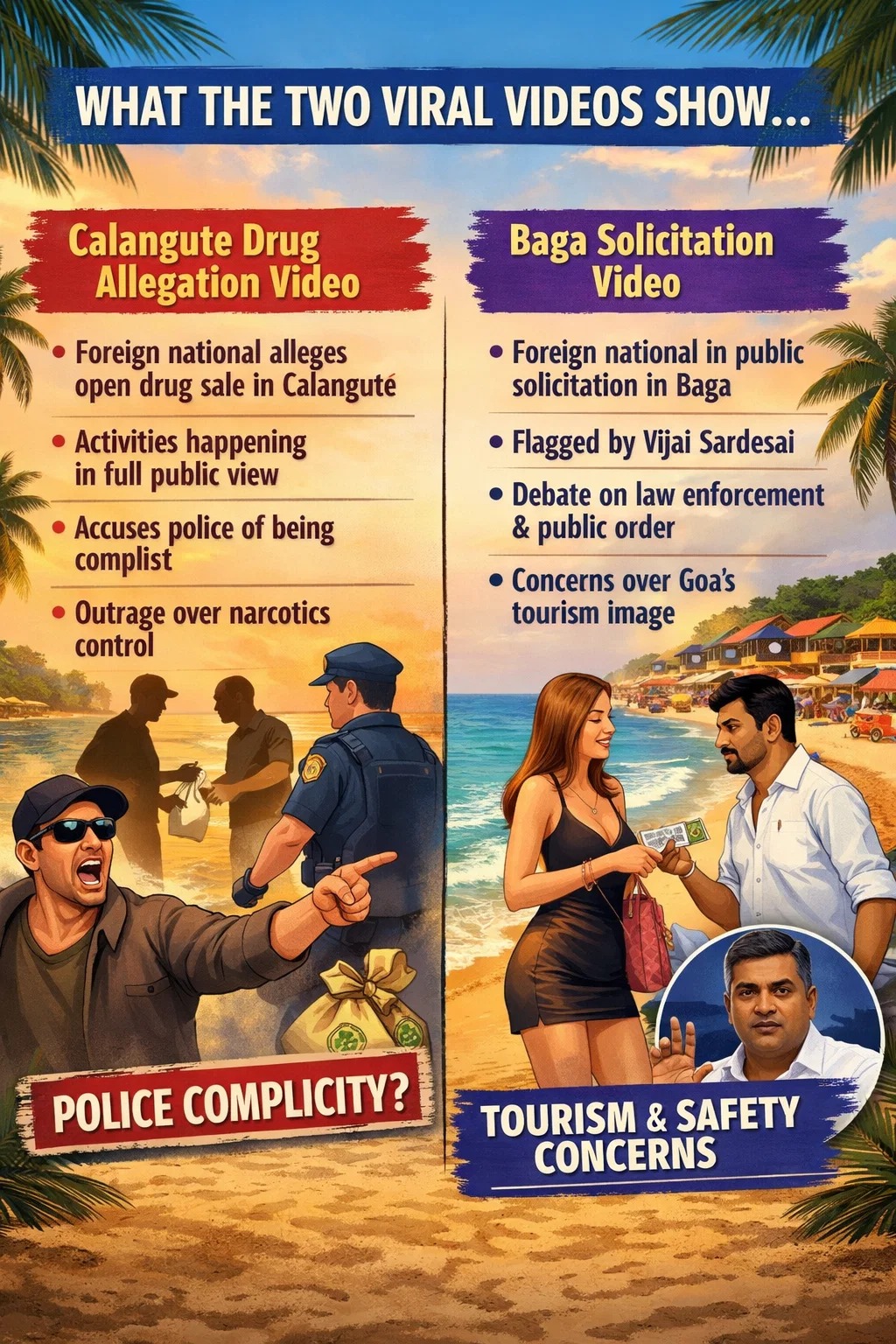
The first video, reportedly shot in Calangute, features a foreign national alleging that drugs are being sold openly “under the nose of police.” In the video, the individual goes a step further, claiming that law enforcement authorities are complicit in allowing such activities to continue unchecked. The clip spread rapidly across social media platforms, drawing widespread attention and sparking outrage among citizens.
Even as the controversy around the first video was yet to subside, a second clip surfaced—this time from Baga—allegedly showing a foreign national soliciting clients on a public street. The visuals, which quickly went viral, intensified scrutiny over policing and public order in Goa’s most frequented tourist belt.
The back-to-back emergence of these videos has provided fresh ammunition to opposition parties, who have accused the government of failing to maintain law and order. Goa Forward Party leader Vijai Sardesai was among the first to react, flagging the Baga video on social media and terming it “shocking and unacceptable.”
“If such activities are happening openly in prime tourist areas like Baga and Calangute, it clearly indicates a serious breakdown of law enforcement. The government must answer whether it has lost control on the ground,” Sardesai said.
Targeting the ruling Bharatiya Janata Party, he further questioned the state’s governance priorities.
“Goa’s reputation is being compromised. We cannot allow illegal activities to flourish while authorities remain passive. This is not the image Goa should project to the world,” he added.
Other opposition leaders also joined the chorus, demanding immediate clarification and action from the Home Department and Goa Police.
“Whether these videos are fully verified or not, they reflect a growing perception of lawlessness. The government must act swiftly to restore public confidence and ensure accountability,” a senior opposition leader said.
Tourism stakeholders have also expressed concern, warning that repeated viral controversies could have long-term consequences on Goa’s global standing. Baga and Calangute are among the most popular destinations for both domestic and international tourists, and any negative perception linked to crime or illegal activities could impact visitor inflow.
Industry voices have stressed that even the perception of unchecked illegal activity—be it drug trade or public solicitation—can damage Goa’s brand as a safe, family-friendly destination.
Despite the uproar, Goa Police have so far not officially confirmed the authenticity of either video. Sources indicated that authorities are likely to examine the footage in detail, identify individuals involved, and determine whether any laws have been violated. Possible offences could include narcotics-related crimes, public solicitation, and immigration violations.
The incidents also underline a broader trend where viral videos increasingly influence political narratives in Goa. In the age of social media, such clips often prompt immediate public reaction and political commentary, even before official verification is completed.
Observers note that while such videos can play a role in highlighting ground realities, they also pose challenges in distinguishing fact from misinformation, placing additional responsibility on authorities to respond swiftly and transparently.
As the controversy continues to unfold, all eyes are now on the Goa Police and the state government to verify the claims and take appropriate action. Whether these incidents lead to concrete enforcement measures or remain confined to political sparring will depend on the outcome of the investigation and the credibility of the viral content.