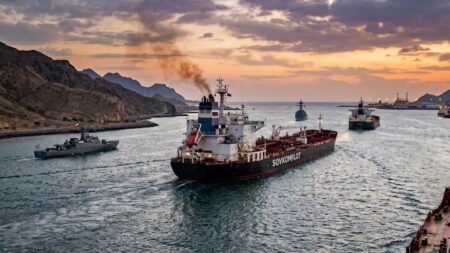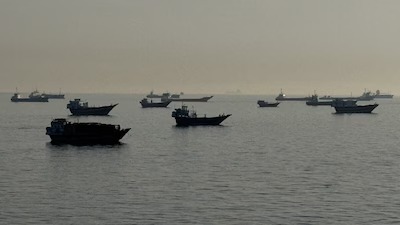
New Delhi: Nine Indian linked tankers carrying crude oil and liquefied petroleum gas (LPG) remain stranded near the Strait of Hormuz as maritime traffic through one of the world’s busiest energy corridors has slowed dramatically following renewed tensions between the United States and Iran.
According to reports, the vessels have 198 Indian seafarers on board, prompting New Delhi to explore diplomatic options, including possible engagement with Iran, to secure their safe passage. The Ministry of External Affairs (MEA) is closely monitoring the situation and is expected to raise concerns regarding the safety of the Indian crew with Iranian authorities.
India has expressed deep concern over the fresh attacks on commercial shipping in the region, warning that the escalation threatens regional peace, security and global trade. The MEA urged all parties to exercise restraint, de escalate hostilities and ensure the uninterrupted flow of energy supplies and commercial shipping through international waterways. It also called for a return to dialogue and diplomacy to achieve a peaceful resolution to the conflict.
The latest crisis follows intensified military exchanges between Washington and Tehran. Iran has indicated that access through the Strait of Hormuz would operate only under what it described as “Iranian arrangements,” signalling tighter control over the strategic waterway.
Commercial traffic through the strait has fallen sharply, with ship tracking data showing only 14 cargo vessels passing through on Wednesday, the lowest daily movement since the US Iran memorandum of understanding came into effect in June. This marks a significant decline from the average of 34 ships transiting the route each day over the previous weeks.
The disruption has raised concerns for India’s energy security, as the Strait of Hormuz serves as a vital gateway for the country’s imports of crude oil, liquefied natural gas and LPG. Before the latest conflict, the route handled nearly 40 percent of India’s crude oil imports, around 60 percent of LNG shipments and almost 90 percent of LPG supplies.
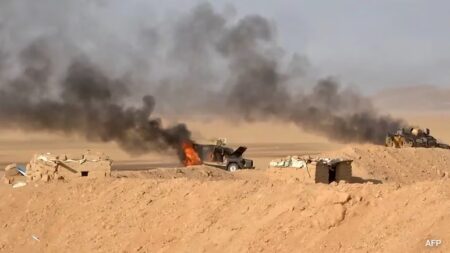
The current standoff follows fresh US military strikes on Iranian targets after attacks on commercial vessels in the Strait of Hormuz, with Iran responding through retaliatory strikes on US military facilities in the Gulf region. As tensions continue to rise, India remains focused on safeguarding its citizens and ensuring the stability of critical global energy supply chains.
Sorry, there was a YouTube error.