Team Goemkarponn
PANAJI: Goa continued to enjoy largely “Good” and “Satisfactory” air quality during the 2025-26 monitoring year, but elevated levels of PM10 particles at several locations have highlighted persistent concerns over dust pollution, according to the latest findings of the Goa State Pollution Control Board (GSPCB).
The Board’s Ambient Air Quality Report for 2025-26, covering the period from April 2025 to March 2026, indicates that although day-to-day air quality generally remained within acceptable limits, the annual average concentration of PM10 crossed the National Ambient Air Quality Standard (NAAQS) of 60 micrograms per cubic metre at a number of monitoring sites.
The locations where annual PM10 levels exceeded the prescribed limit include Panaji, Mapusa, Vasco, Baina, Ponda, Bicholim, Curchorem, Tilamol, Kundaim Industrial Estate and Cuncolim Industrial Estate. Among these, Bicholim registered the highest annual average PM10 concentration at 75 µg/m³, making it the most affected monitoring station during the year.
According to the report, the increase in airborne particulate matter is largely linked to heavy vehicular traffic, construction activities, excavation work and dust generated from roads and other development projects.
The assessment also found that while the Air Quality Index (AQI) remained “Satisfactory” for most of the year, it occasionally slipped into the “Moderate” category at Bicholim, Vasco, Baina, Tuem Industrial Estate, Kundaim Industrial Estate and Cuncolim Industrial Estate, reflecting temporary declines in air quality.
Despite the exceedances, the report notes that Goa witnessed an overall reduction in annual PM10 concentrations compared to the previous monitoring cycle. However, pollution trends differed at some locations, with Vasco, Ponda and Bicholim recording changes that suggest local factors continue to influence air quality.
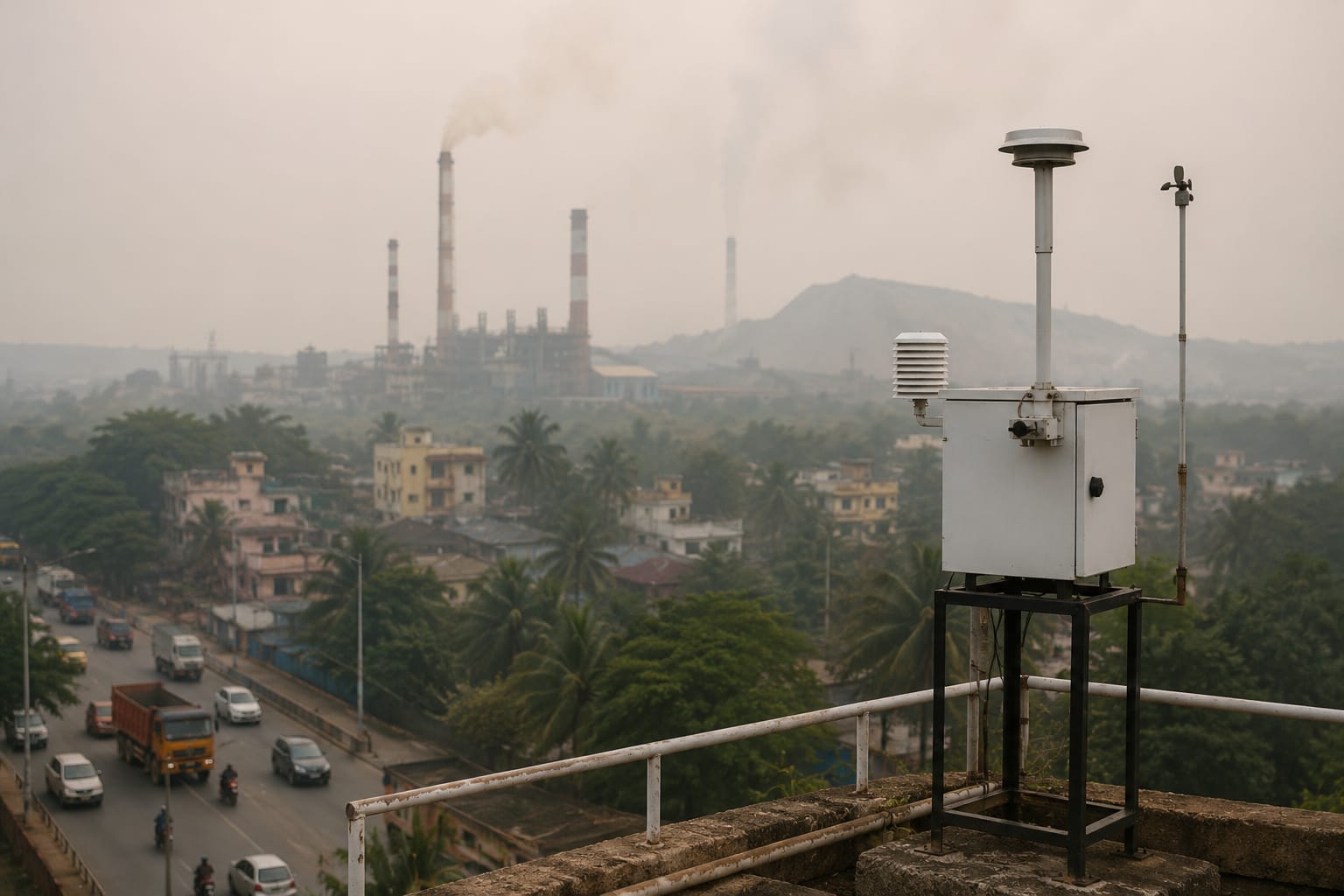
The GSPCB currently monitors ambient air through 18 stations located across residential neighbourhoods, commercial centres, industrial estates and mining belts under the National Air Monitoring Programme of the Central Pollution Control Board. Sixteen of these stations are monitored by laboratories accredited by the Ministry of Environment, Forest and Climate Change, while the remaining two are managed directly by the Board.
Officials said the monitoring results are shared with the Department of Environment and Climate Change and other government agencies to help identify pollution hotspots and guide measures under Goa’s State Action Plan for Clean Air, aimed at improving air quality and reducing particulate pollution across the State.