


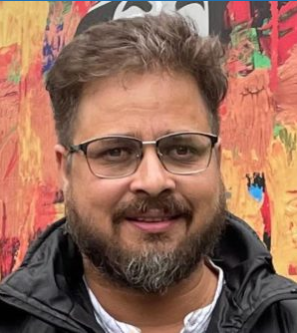
“The frequent protests called by CJP’s Abhijit Dipke have raised uncomfortable questions. A demonstration was called for October 10, followed by another on October 12, and now October 16. What exactly is the objective of repeatedly mobilising people on the streets? Is this a sustained campaign for a clearly defined cause, or are protests becoming an end in themselves?
Businesses have reportedly claimed losses of around Rs 2,000 crore because of the disruptions. Such a figure needs independent verification, and responsibility for the losses must be established. Yet the larger concern cannot be dismissed. When repeated demonstrations disrupt commercial activity, affect livelihoods, inconvenience commuters and create uncertainty, the costs are borne not by politicians sitting on platforms but by ordinary citizens, small traders, employees and daily wage earners.
Democracy cannot mean that one person’s right to protest becomes another person’s right to suffer.”
When demonstrations become a tool for political mobilisation, ordinary citizens and businesses pay the price. Democracy cannot be held hostage to endless street protests.
Protest is the lifeblood of democracy. It gives citizens the right to question authority, challenge injustice and demand accountability from those in power. No government, however powerful, can claim that its decisions are beyond scrutiny. But a fundamental question needs to be asked today: are we losing the sanctity of protests, and are those who claim to defend democracy beginning to undermine the very principles they profess to uphold?
The frequent protests called by CJP’s Abhijit Dipke have raised uncomfortable questions. A demonstration was called for October 10, followed by another on October 12, and now October 16. What exactly is the objective of repeatedly mobilising people on the streets? Is this a sustained campaign for a clearly defined cause, or are protests becoming an end in themselves?
Businesses have reportedly claimed losses of around Rs 2,000 crore because of the disruptions. Such a figure needs independent verification, and responsibility for the losses must be established. Yet the larger concern cannot be dismissed. When repeated demonstrations disrupt commercial activity, affect livelihoods, inconvenience commuters and create uncertainty, the costs are borne not by politicians sitting on platforms but by ordinary citizens, small traders, employees and daily wage earners.
Democracy cannot mean that one person’s right to protest becomes another person’s right to suffer.
The Constitution guarantees the freedom to assemble peacefully and express dissent. These are essential democratic freedoms, not concessions granted by the government. But these rights also operate within a constitutional framework. The Supreme Court has repeatedly recognised that the right to protest is not unlimited and that public spaces cannot be occupied indefinitely in ways that deny others their rights.
This raises an important question about the role of the judiciary. Why have repeated demonstrations been permitted to continue in the manner alleged? Has the court examined the consequences of successive calls for protests, the extent of disruption and the balance between the demonstrators’ rights and the public’s interests?
However, it would be wrong to suggest that the Supreme Court is condoning anarchy without examining its specific orders and the circumstances before it. Courts must protect dissent, but they must also ensure that constitutional freedoms are exercised responsibly. The public deserves clarity on where that balance lies.
The more troubling issue is the apparent shift in the political messaging surrounding these demonstrations. The protests were presented as a campaign against alleged vote theft, a demand for Ganesh Kumar’s resignation and concerns surrounding NEET. These are issues that deserve serious scrutiny. Electoral integrity cannot be compromised, public officials must be accountable, and allegations concerning competitive examinations must be investigated fairly.
But the political character of a movement changes when its own leaders openly describe its objective in broader political terms.
Prashant Bhushan, reportedly speaking alongside Dipke, Neha Bora and Prakash Raj, has described the fight as one for regime change, with P. Chidambaram also backing that position. If these statements accurately reflect the campaign’s direction, the public is entitled to ask a straightforward question: is this movement seeking specific institutional reforms, or is it now pursuing a larger political objective?
There is nothing inherently undemocratic about seeking a change of government. Regime change through elections is the very essence of parliamentary democracy. Opposition parties and citizens are entitled to campaign against an incumbent government. But political ambitions should be stated honestly. A movement cannot indefinitely present itself as a limited campaign for electoral accountability while simultaneously expanding its stated objective into a struggle to dislodge the government.
That distinction matters because public trust is easily exploited and difficult to restore. Citizens who join a protest over a specific grievance should know whether they are participating in a targeted campaign or being drawn into a broader political battle.
The comparisons with Sri Lanka, Bangladesh and Nepal also require caution. Each country has its own political circumstances, institutional weaknesses and history of public mobilisation. India is not destined to follow their trajectories simply because people demonstrate. Our democracy has strong constitutional institutions, regular elections and a long tradition of peaceful transfers of power.
Yet the lesson is equally clear: institutions must remain credible, political leaders must exercise restraint, and public anger must not be manipulated into permanent confrontation.
The answer is not to suppress protests or criminalise dissent. It is to demand accountability from everyone involved. Organisers must explain their objectives, ensure peaceful conduct and consider the public consequences of repeated demonstrations. Authorities must facilitate lawful protest while maintaining public order. Courts must protect fundamental rights without overlooking the rights of others.
Above all, political leaders must recognise that democracy is much larger than the government they oppose or the government they support.
A protest should be a means of correcting injustice, not a permanent instrument of disruption. When demonstrations become repetitive, their objectives keep changing and ordinary people are left paying the price, the movement owes the public an explanation.
The right to protest must be protected. But the public also has the right to ask: protest for what, at what cost, and to whose political benefit?
