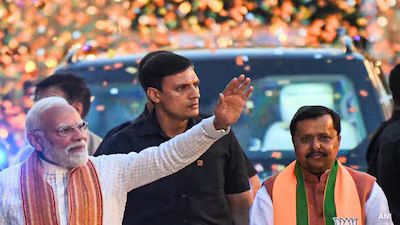
New Delhi: Following a decisive electoral outcome in West Bengal, Narendra Modi announced that the Centre’s flagship healthcare scheme, Ayushman Bharat Pradhan Mantri Jan Arogya Yojana, will soon be introduced in the state. He stated that approval for the programme would be granted in the first cabinet meeting of the new government.
The scheme provides cashless health insurance coverage of up to ₹5 lakh per family annually and includes automatic coverage for citizens above the age of 70. Its implementation in West Bengal marks a significant policy shift, as the state had earlier opted out under the leadership of Mamata Banerjee, citing the presence of its own healthcare initiatives.
Speaking after the election results, the Prime Minister described the moment as the beginning of a new phase focused on development and public welfare. He assured residents that efforts would be directed toward improving healthcare access, creating employment opportunities, and enhancing overall living conditions in the state.
He also emphasised that the introduction of the scheme would ease the financial burden of medical treatment on families, a major concern for many households. The programme is already operational in most states and Union Territories, with costs shared between the central and state governments.
The rollout in West Bengal is expected to bring the state in line with the broader national framework of public healthcare support. The scheme has gained popularity for its wide coverage and its role in reducing out-of-pocket medical expenses.
With the political transition paving the way for new policy decisions, the implementation of Ayushman Bharat is being positioned as a key step in expanding healthcare access and strengthening social welfare measures in the state.