Team Goemkarponn
PANAJI: A new study has highlighted cigarette-butt litter as an overlooked source of pollution along Goa’s heavily visited beaches, with researchers warning that discarded filters can persist in the environment and release contaminants into coastal ecosystems.
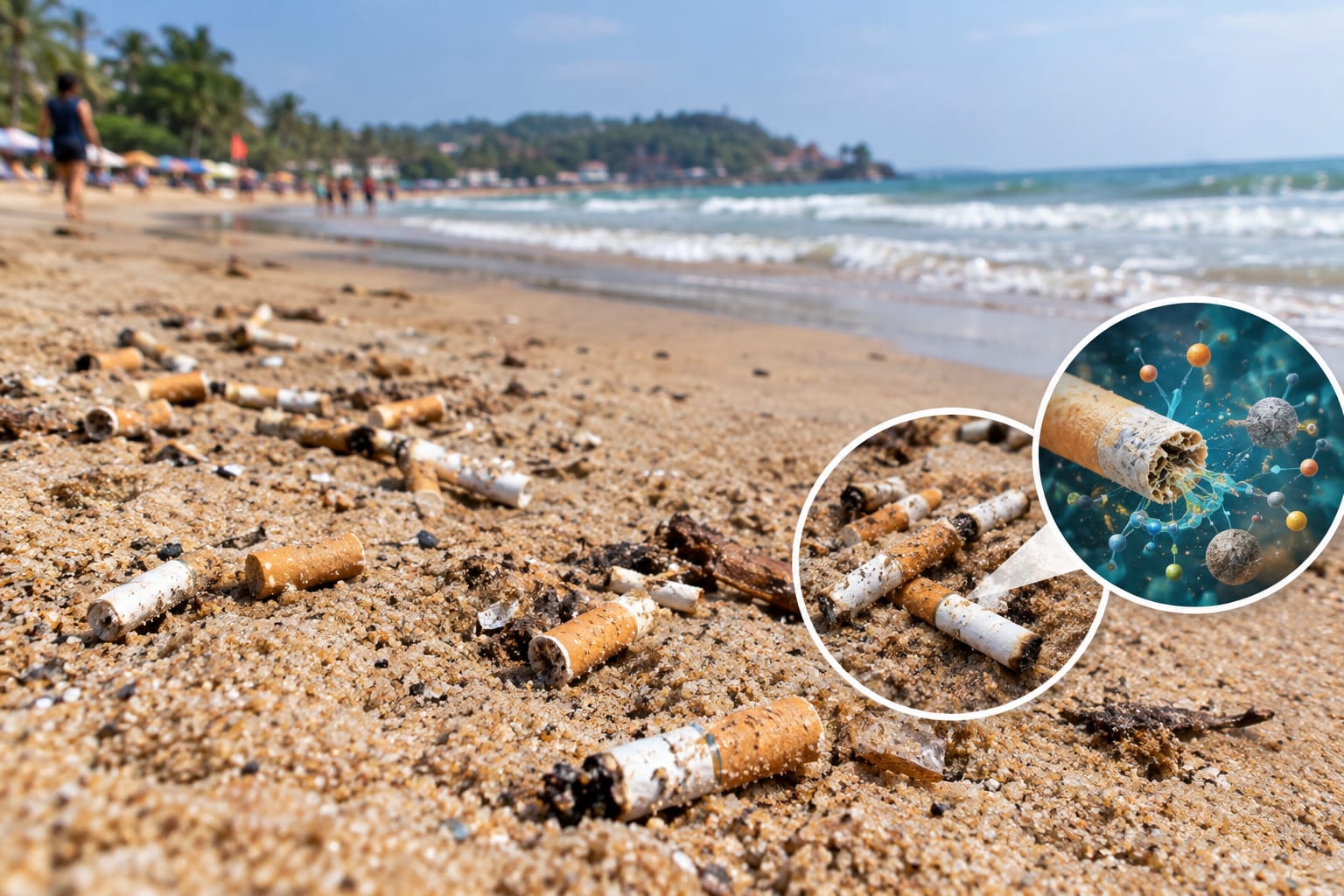
Researchers from the CSIR-National Institute of Oceanography (NIO), Goa, collected and documented 758 cigarette butts from eight beaches frequented by tourists. Surveys carried out during different tidal conditions found an average of 3.15 cigarette butts per square metre.
Baga recorded the highest concentration, with 5.77 butts per square metre. Calangute followed at 5.60, while Arambol registered 4.97 butts per square metre.
The distribution of the waste also pointed towards a connection with tourist activity, with beaches attracting larger crowds showing greater quantities of cigarette-butt litter.
To measure the extent of the problem, the researchers applied the Cigarette Butt Pollution Index (CBPI) along with the Hazardous Items Index (HII). The CBPI assessment placed all eight surveyed beaches in the severe pollution category.
The researchers said the environmental concern is not limited to the physical presence of cigarette filters in the sand. Cigarette filters commonly contain cellulose acetate, a plastic-based material that does not readily disappear from the environment and can gradually fragment into smaller particles.
Discarded filters can also retain and release substances left behind during smoking. These include nicotine, hydrocarbons and various metals, potentially allowing pollutants to enter surrounding soil, sand and coastal waters.
Analysis of the collected material detected several heavy metals. While the researchers assessed the overall metal contamination as falling within a low-to-moderate risk range, copper and zinc were present at relatively higher concentrations.
The findings raise concerns over the cumulative impact of cigarette-butt waste, particularly at beaches where large numbers of visitors generate substantial quantities of litter.
According to the researchers, the study represents an effort to establish the extent of cigarette-butt pollution and associated trace-metal contamination along the Indian coastline.
The study underscores the need for dedicated measures to tackle tobacco-related litter at beaches, including better disposal facilities, awareness campaigns and stronger implementation of anti-littering regulations.
With cigarette butts often small enough to escape routine beach-cleaning operations, researchers have indicated that preventing the waste from reaching the sand in the first place will be crucial to reducing its environmental impact.