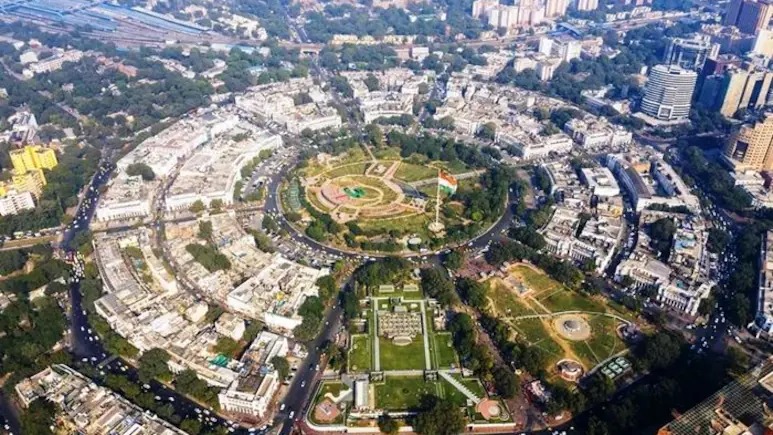
New Delhi: The Delhi Development Authority (DDA) has approved the Master Plan for Delhi 2047, a comprehensive roadmap that aims to address the capital’s growing housing demand through affordable homes, rental accommodation, redevelopment of older neighbourhoods and better planned urban expansion. The proposal will now be sent to the Ministry of Housing and Urban Affairs for final approval.
The master plan estimates that Delhi will require nearly 40 lakh additional homes by 2047 as the city’s population rises and average household sizes continue to shrink. To meet this demand, the plan promotes compact homes ranging from 25 to 60 square metres, making housing more accessible for middle income families, students and young professionals.
A major focus is the creation of 30 lakh housing units through land pooling and development around Metro and public transport corridors. The blueprint also encourages rental housing, including student hostels, shared dormitories and dedicated accommodation for workers, with incentives proposed for private developers.
The plan also prioritises the redevelopment of ageing residential areas, including old DDA colonies, cooperative housing societies, resettlement colonies and employer provided housing. Many two storey DDA homes built over five decades ago could be reconstructed with modern infrastructure while allowing residents to remain within established neighbourhoods.
Beyond central Delhi, the Master Plan identifies emerging growth corridors such as Narela, Bawana, Najafgarh and Dwarka, supported by improved connectivity through Urban Extension Road II and expanding transport networks. Higher Floor Area Ratio norms within 500 metres of Metro, RRTS and railway stations are expected to encourage denser, transit oriented development.
The blueprint also introduces revised rules for the Yamuna floodplain by separating the riverbed from the outer floodplain. While permanent urban construction will remain restricted, the outer zone may accommodate recreational projects, including a proposed 52 kilometre cycling track, balancing environmental protection with carefully managed public use.