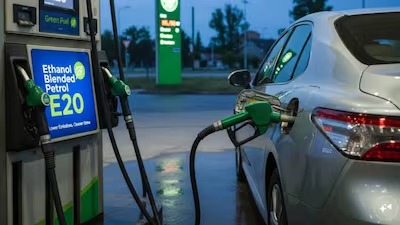
New Delhi: The Centre is considering bringing back petrol with a 10% ethanol blend as concerns grow among motorists over the performance and fuel economy of E20 petrol, particularly in older vehicles.
The Petroleum Ministry is discussing whether existing premium petrol brands such as Indian Oil’s XP95, BPCL’s Speed and HPCL’s Power95 could be offered as E10 fuel. Such a move could allow oil companies to provide a lower ethanol blend without creating an entirely new storage and dispensing network at fuel stations.
The proposal is still under consideration, with no final decision taken. One option being examined is offering 95 octane E10 petrol as a premium product, while another is introducing a more affordable regular E10 variant.
The debate comes after motorists raised concerns about reduced mileage and possible effects of E20 petrol on older vehicles. Demand for premium petrol has reportedly increased significantly, with its share of fuel sales rising from around 4% earlier to approximately 15%.
However, current premium fuels such as XP95, Speed and Power95 are not E10 alternatives. They also contain a 20% ethanol blend but include additional additives designed to improve combustion, clean engine components and provide protection against corrosion.
These fuels are sold at a substantially higher price than regular petrol. A separate Octane 100 fuel is also available for high performance and luxury vehicles and does not contain ethanol.
Road Transport and Highways Minister Nitin Gadkari has acknowledged that E20 can affect fuel economy, with the impact varying according to vehicle type and age. He has indicated that mileage could decline by around 2% to 6%.
At the same time, government testing has not found engine durability failures attributable to E20. Tests have also indicated improvements in acceleration and driving performance, along with significantly lower carbon emissions compared with E10.
The government had earlier rejected the idea of maintaining separate nationwide supply chains for different ethanol blends, citing higher logistics costs and inventory complications.
The latest proposal could provide a middle ground by using existing premium fuel infrastructure to offer E10, although its final form and pricing remain undecided.