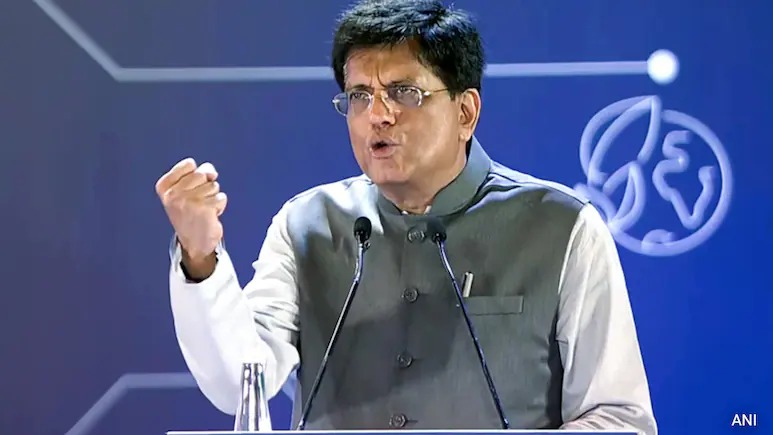
New Delhi: Union Commerce and Industry Minister Piyush Goyal has described the India European Union Free Trade Agreement as a fair, equitable and balanced pact, calling 2026 a historic year in bilateral relations. Speaking after the third India EU Trade and Technology Council Ministerial Meeting in Brussels, Goyal said the agreement would create new opportunities for businesses and strengthen economic ties between the two partners.
He said the trade pact, referred to as the “mother of all trade deals”, is designed to benefit businesses on both sides while supporting long term economic growth. According to Goyal, the agreement reflects a shared vision of building a trusted, innovation driven and future ready partnership.
The minister said discussions during the meeting focused on improving investment flows, strengthening supply chains and enhancing cooperation in emerging technologies. India and the European Union also finalised a work programme on foreign direct investment screening and exchanged best practices aimed at facilitating greater cross border investments.
Highlighting global economic challenges, Goyal said both sides remain committed to supporting an open, rules based and inclusive multilateral trading system through the World Trade Organization. He also stressed the importance of reducing dependence on single sources in critical sectors by building resilient and diversified supply chains.
The partnership will also promote collaboration in advanced manufacturing, semiconductor technology, artificial intelligence, deep tech startups, industrial innovation and digital connectivity. Goyal expressed confidence that the Free Trade Agreement would provide a strong framework for expanding trade and business cooperation, with both sides looking forward to signing the pact later this year.
Minister of State for Commerce and Industry Jitin Prasad said India and the European Union have agreed on a forward looking action plan for 2026 and 2027 to deepen cooperation in strategic technologies. He noted that joint efforts in semiconductors, artificial intelligence, high performance computing and digital public infrastructure have already shown encouraging progress.
Prasad added that the partnership aims to generate tangible benefits by promoting innovation, developing digital skills, strengthening technology value chains and improving opportunities for skilled professionals, while helping shape open, trusted and sustainable global technology standards.