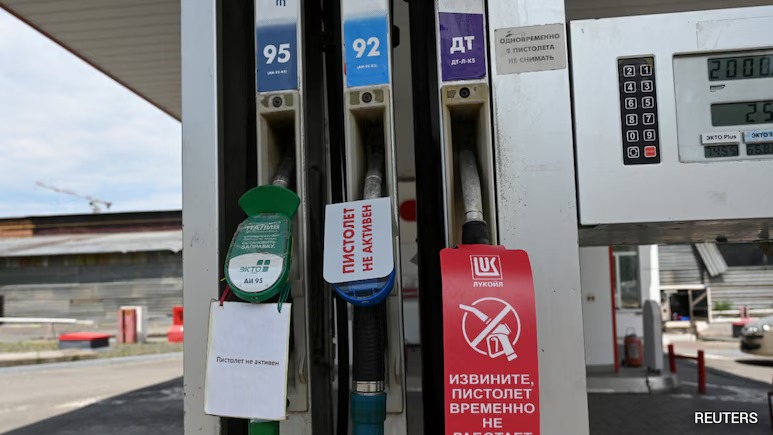
New Delhi: Russia has approached Indian refiners for additional gasoline supplies as repeated Ukrainian attacks on its refineries continue to disrupt fuel production, marking an unusual shift in the energy trade relationship between the two countries.
India, currently the largest buyer of Russian seaborne crude oil, is now being asked to supply refined fuel back to Russia as the country grapples with one of its worst gasoline shortages in recent years. According to reports, Russian energy giants including Rosneft, Gazprom Neft and Lukoil have reached out to both private and state run Indian refiners to explore possible fuel purchases.
The move comes after a significant portion of Russia’s refining capacity was damaged by drone strikes, with nearly 40 percent of affected facilities expected to remain offline for at least two months if there are no further attacks. One shipment of Indian gasoline has already been dispatched to Russia, and additional cargoes could follow if supply arrangements are finalised.
However, Indian state owned refiners have reportedly informed Russian companies that they currently do not have surplus gasoline available for export. Any future supplies, if agreed upon, are expected to be routed through international traders rather than through direct government to government transactions.
Officials have indicated that fuel shipments could be carried out through ship to ship transfers in international waters before reaching Russian ports. Reports also suggest that Russia may seek diesel imports from India if further attacks lead to additional refinery disruptions, although domestic diesel supplies remain sufficient for now.
Earlier this month, Indian authorities stated that domestic companies were not directly exporting fuel to Russia but acknowledged that traders could be supplying Indian origin fuel through commercial arrangements.
Meanwhile, Nayara Energy, one of India’s major private refiners, has denied selling fuel directly to Russian companies. The company said its priority remains meeting domestic demand across India through its extensive retail network and bulk supply channels.
Sorry, there was a YouTube error.