


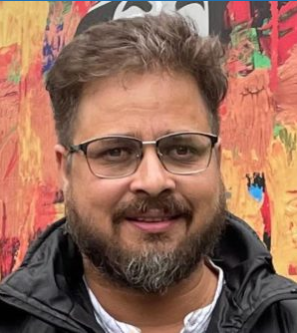
“There is nothing wrong with having an opinion about a public project, the cost of a monument, its location or even the priorities of those who built it. Healthy debate is part of every democratic society. However, criticism must never descend into obscenity, mockery or language intended to hurt the sentiments of an entire community. Once discussion crosses that line, it ceases to be free expression and becomes an act that can disturb public peace.
The devotees have sought legal action by submitting screenshots and naming those they believe are responsible. If the comments indeed violate the law, the police must investigate fairly, identify those involved and take appropriate action. At the same time, the investigation must be guided solely by evidence and the law, not by public pressure or emotional demands. Every accused person is entitled to due process.”
The complaint filed by devotees of Shri Swami Samarth Math in Siolim over alleged derogatory social media comments on the newly installed 21-foot statue of Shri Swami Samarth once again raises an important question. Where should society draw the line between freedom of expression and deliberate insult?
Social media has given every individual a platform to express opinions instantly. It has also created a culture where many believe anonymity or distance behind a screen gives them the right to ridicule anything and everything. Religious beliefs, places of worship and revered spiritual figures have increasingly become easy targets for insensitive jokes, abusive remarks and provocative comments designed only to attract attention.
There is nothing wrong with having an opinion about a public project, the cost of a monument, its location or even the priorities of those who built it. Healthy debate is part of every democratic society. However, criticism must never descend into obscenity, mockery or language intended to hurt the sentiments of an entire community. Once discussion crosses that line, it ceases to be free expression and becomes an act that can disturb public peace.
The devotees have sought legal action by submitting screenshots and naming those they believe are responsible. If the comments indeed violate the law, the police must investigate fairly, identify those involved and take appropriate action. At the same time, the investigation must be guided solely by evidence and the law, not by public pressure or emotional demands. Every accused person is entitled to due process.
This episode also exposes the darker side of digital culture. Social media algorithms reward outrage more than thoughtful conversation. A controversial comment receives more attention than a respectful opinion. Many users deliberately provoke religious communities because they know such posts spread rapidly, attract reactions and increase their online visibility. In the process, social harmony becomes collateral damage.
Equally worrying is the growing tendency to weaponise social media against every institution, faith or public personality. Today it may be a Hindu saint. Tomorrow it could be another religion, another community or another cultural symbol. If such behaviour becomes normalised, mutual respect among communities will steadily erode.
The challenge before law enforcement is equally significant. Investigations into online offences often move slowly because of fake profiles, encrypted platforms and technical hurdles in tracing users. Yet delays also send the wrong message. When offensive content remains online for days or weeks without consequences, it encourages others to imitate the same behaviour. Digital accountability must keep pace with digital communication.
However, there is another side that deserves equal attention. Society must avoid responding to offensive speech with threats, intimidation or attempts to silence legitimate criticism. Demanding arrests before an investigation is complete or setting deadlines for police action can create unnecessary pressure on the legal process. Justice should never appear to be dictated by street sentiment. Institutions must function independently and transparently.
This incident should also encourage educational institutions, families and civil society to promote digital ethics. Respectful disagreement is a value that must be taught. Young people especially need to understand that a comment typed in seconds can have lasting legal and social consequences. Freedom on the internet is accompanied by responsibility.
Technology companies too cannot escape responsibility. Platforms must respond more efficiently to reports involving hate speech, abusive content and deliberate religious provocation. Clearer moderation standards, quicker review mechanisms and stronger cooperation with law enforcement can reduce the spread of inflammatory material without undermining genuine free speech.
India’s diversity has always rested on one simple principle, respect for one another’s beliefs even when we do not share them. Religious harmony is not maintained merely through laws but through everyday conduct, restraint and civility. Online behaviour should reflect the same standards expected in public life.
The Siolim controversy is therefore larger than a complaint over a handful of social media posts. It is a reminder that technology has amplified voices but not necessarily wisdom. The answer lies neither in unchecked online abuse nor in emotional overreaction. It lies in firm enforcement of the law, protection of constitutional freedoms and a collective commitment to preserving respect in an increasingly divided digital world.
