Team Goemkarponn
PANAJI: Goa has made steady progress towards its renewable energy ambitions, achieving nearly half of its 2030 clean energy target. However, despite the gains, the State remains a long way from generating enough electricity to meet its own needs, with the bulk of its power still being sourced from outside Goa.
Official figures show Goa has installed 73.43 MW of renewable energy capacity against its target of 150 MW by 2030. While this marks significant progress in expanding clean energy infrastructure, the capacity remains small when compared to the State’s peak electricity demand of around 750 MW.
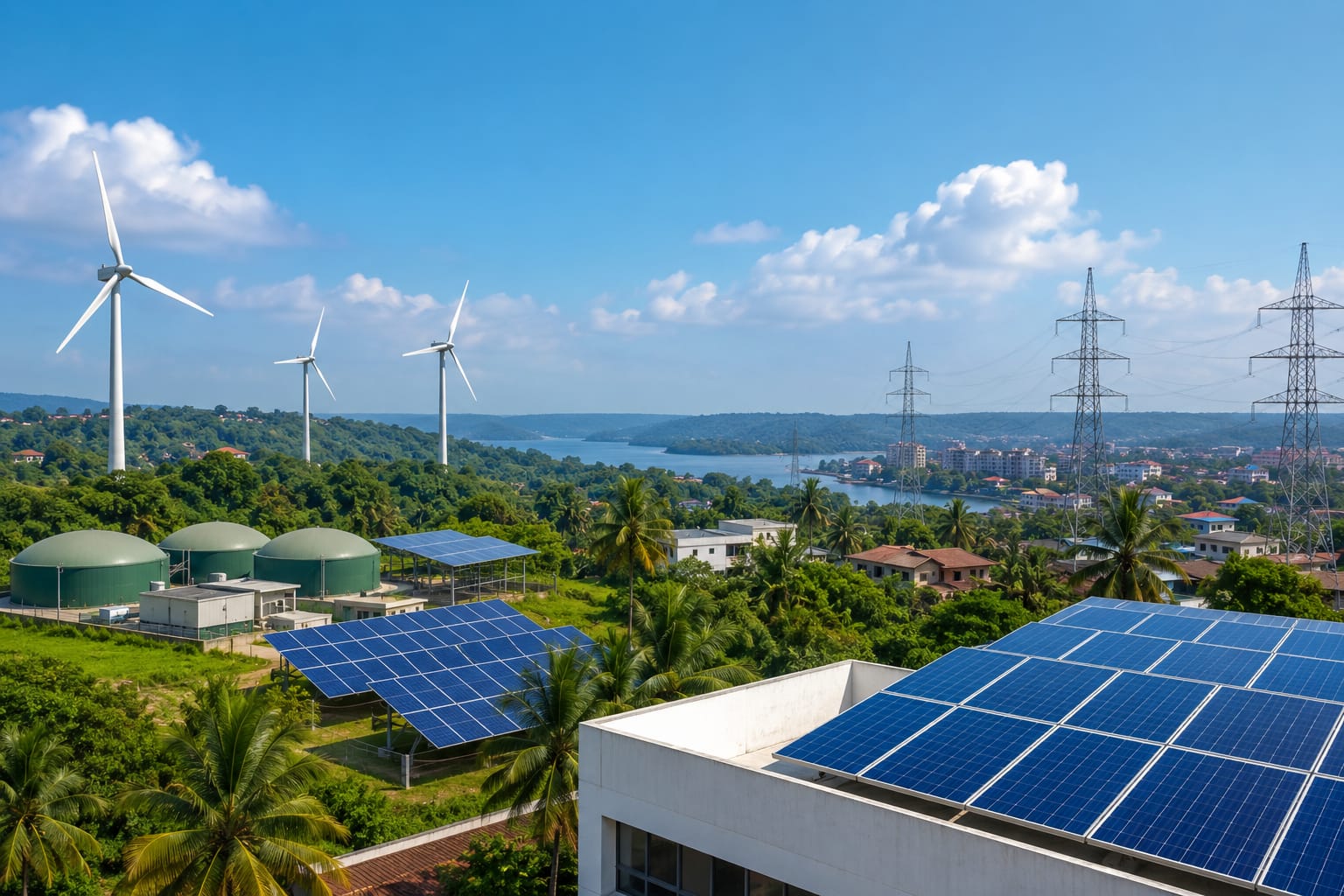
The growth has been driven primarily by rooftop solar systems, which account for nearly 64 MW of the installed renewable capacity. Increased participation by households, commercial establishments and institutions has helped Goa make rapid gains over the past few years.
Despite this progress, locally generated renewable energy contributes only a limited share of the State’s overall electricity requirement. Goa continues to depend heavily on power supplied through the national grid, with most of its electricity procured from central generating stations.
The financial impact of this dependence is substantial. Government estimates indicate that the State is expected to spend over Rs 6,800 crore on electricity purchases during the next three financial years, with annual procurement costs projected to increase steadily.
Experts believe that while rooftop solar has played an important role in expanding renewable capacity, the next phase of the State’s energy transition must focus on larger generation projects capable of supplying power on a much bigger scale.
They point out that Goa’s renewable portfolio remains dominated by solar, with only modest contributions from biogas, waste-to-energy and small hydropower projects. Broadening this mix through utility-scale solar parks, floating solar installations, battery storage and additional waste-to-energy facilities would strengthen energy security and reduce dependence on imported electricity.
With just four years remaining to achieve its 2030 renewable energy goal, energy planners say Goa will need to accelerate investments and diversify its clean energy infrastructure if it hopes to move beyond capacity targets and towards greater self-reliance in power generation.