Team Goemkarponn
PANAJI: The southwest monsoon has weakened once again over Goa, with rainfall activity remaining below normal and weather conditions expected to stay largely subdued over the next week. While recent showers have helped replenish several reservoirs, officials say the State cannot afford to become complacent as rainfall continues to lag behind seasonal averages.
The India Meteorological Department (IMD) has forecast only light to moderate rain across Goa over the next seven days and has not issued any weather alerts. Rainfall has declined steadily over the past few days, indicating a pause in monsoon activity after a brief revival earlier this month.
Data released by the IMD shows Goa has received 906.3 mm of rainfall since the onset of the monsoon against the normal seasonal average of 1,288.3 mm, leaving the State with a deficit of nearly 30 per cent.
Sanguem recorded the highest rainfall during the past 24 hours, followed by Quepem and Valpoi, while most other parts of the State experienced only scattered light showers.
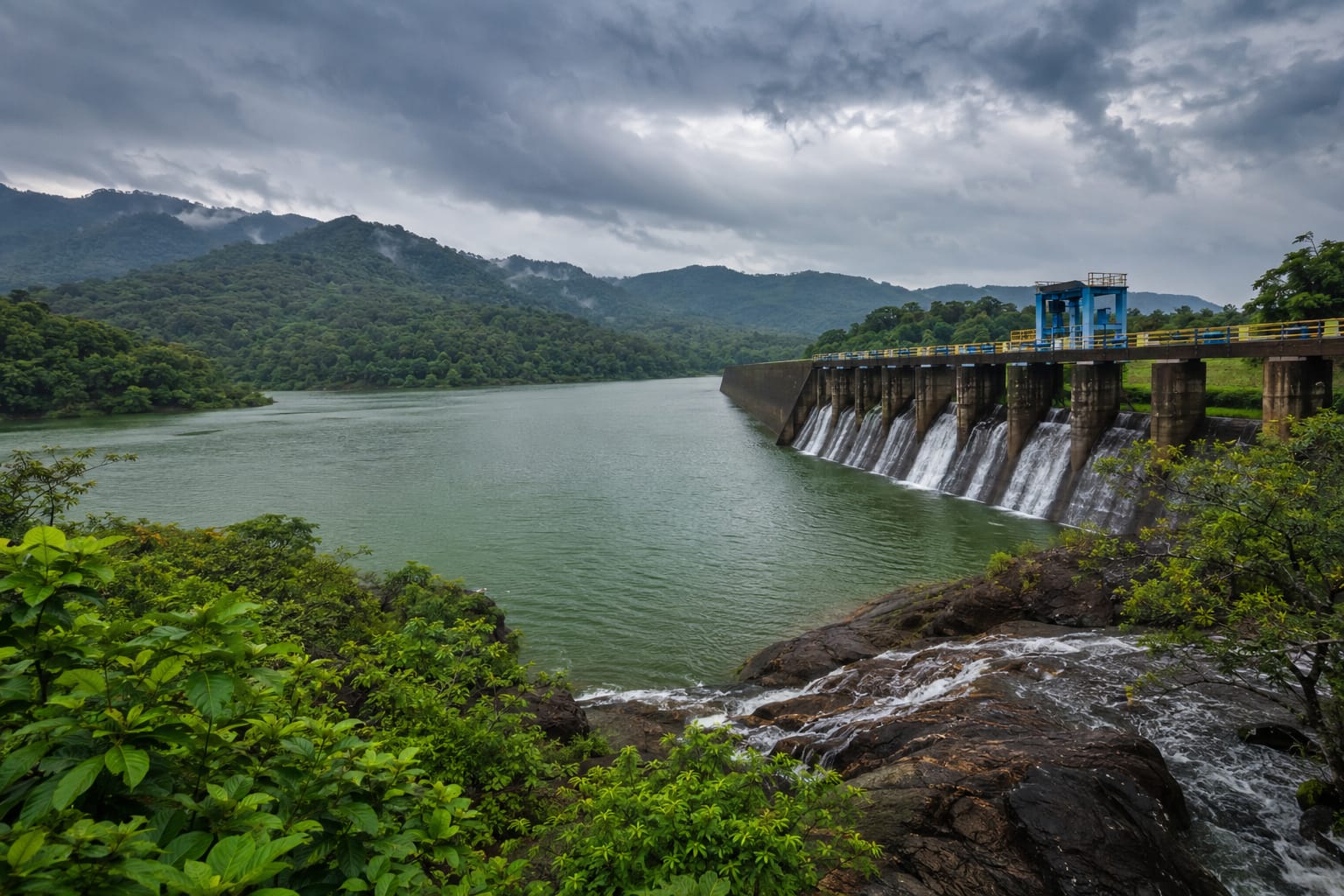
Although rainfall has weakened again, reservoir storage has improved significantly compared to the worrying situation witnessed at the end of June. According to the Water Resources Department (WRD), Gaunem reservoir currently has the highest storage level, followed by Amthane, Chapoli and Tillari, all of which have crossed the halfway mark.
Selaulim, the State’s largest drinking water reservoir, has also gained substantially and is now approaching half of its storage capacity. However, Anjunem reservoir, which supplies water to parts of Sattari and Bicholim, continues to remain under pressure with storage well below the levels recorded in other reservoirs. Panchawadi has also shown gradual improvement but is yet to reach the halfway mark.
Officials say the rainfall received during the first week of July was sufficient to ease the immediate threat of a water shortage, but sustained rainfall will still be required over the coming weeks to ensure adequate reserves for the dry season.
The current scenario contrasts sharply with last year, when several reservoirs had already reached full capacity by early July and others had begun overflowing well before the end of the month.
According to WRD officials, this year’s delayed monsoon onset and prolonged dry conditions through June significantly affected reservoir inflows. While early July rainfall helped improve storage, the renewed dry spell has once again shifted attention to the uncertainty surrounding the remainder of the monsoon season.
Officials emphasised that the State is strengthening long-term water security through projects such as the Sal Barrage, construction and restoration of check dams, and other measures designed to capture and store more rainwater for drinking and irrigation needs.
They added that changing rainfall patterns, characterised by intense downpours over short periods followed by extended dry spells, are becoming an increasing challenge for water resource planning, making long-term conservation and storage infrastructure more important than ever.