Team Goemkarponn
PANAJI: The Goa government has acknowledged that it does not have a recent scientific assessment of the condition of fish stocks in the State’s territorial waters, despite maintaining that fish catches have remained stable over the past decade.
Fisheries Minister Nilkanth Halarnkar told the Legislative Assembly during the monsoon session that the government had not undertaken a scientific stock assessment or sustained monitoring programme in the last 10 years covering fish populations, breeding and spawning areas, marine biodiversity or the effects of environmental and developmental pressures.
The areas for which no such assessment was carried out include the impact of climate change, rising sea temperatures, pollution, microplastics, dredging and coastal development on Goa’s marine resources.
The admission puts the government’s assertion of “no decline” in fish catch under scrutiny, as there is no corresponding scientific stock assessment cited to establish whether fish populations have remained healthy or sustainable.
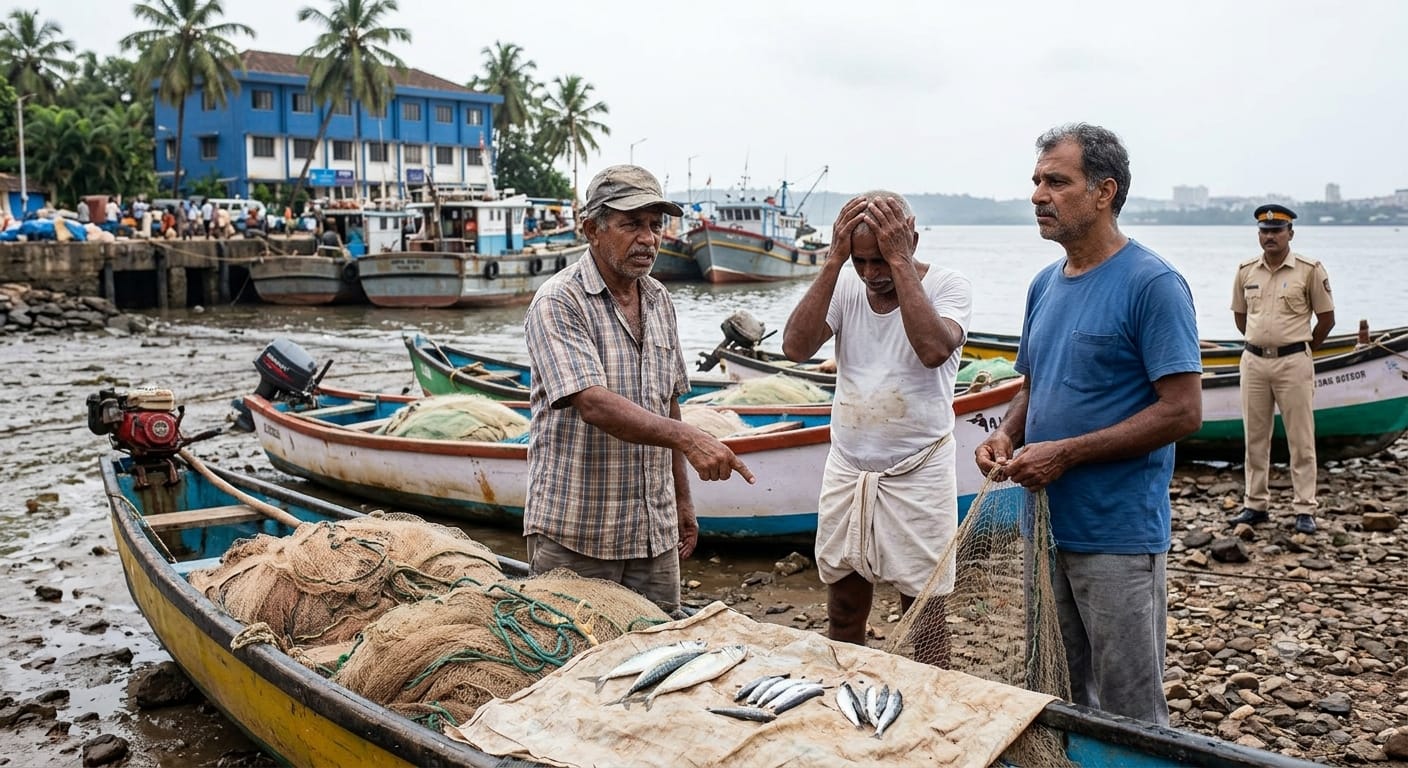
For Goa’s fishing communities, the issue has wider economic and social implications. Fish is a key component of the State’s food culture and supports thousands of people directly and indirectly. Fishermen have for years voiced concerns about reduced availability of certain species, changing marine patterns and increasing pressure on coastal resources.
On the enforcement front, the Fisheries Department said it conducts regular sea patrols using its departmental vessel, working alongside the Coastal Police. The Coast Guard is also approached for assistance in detecting illegal fishing. Monitoring is carried out at landing centres and important jetties, while a 24-hour control room and helpline are available for reporting violations.
Another gap highlighted in the government’s response concerns the annual fishing ban. No dedicated study has been conducted to determine how effectively the ban helps replenish fish populations, protect breeding stocks or support the economic interests of traditional fishermen.
The seasonal restriction applies to mechanised boats using trawling and purse-seine nets. However, registered traditional motorised canoes fitted with engines of up to 10 HP and operating with gill nets are exempt from the ban.
The government has pointed to several initiatives intended to improve the long-term health of the fisheries sector. These include artificial reefs and aquaculture projects under Central schemes. Fourteen artificial reef units have been taken up under the Pradhan Mantri Matsya Sampada Yojana (PMMSY), with an estimated investment of ₹4.3 crore.
Goa-registered fishing vessels have also received 87 permits to operate in India’s Exclusive Economic Zone, while two vessels have been authorised for high-seas fishing. The government said transponders are being fitted on mechanised and motorised boats to improve safety and security.
However, the absence of a comprehensive scientific assessment leaves a basic question unanswered: if Goa has not measured the condition of its fish stocks for a decade, what evidence supports the government’s claim that fish catches have not declined?