Team Goemkarponn
PANAJI: The Goa government is preparing a long-term transformation of its water supply system, with the aim of replacing the existing intermittent arrangement with 24×7 water availability across the State.
Drinking Water Minister Subhash Phal Dessai, in a reply to an unstarred question in the Assembly, said the government intends to modernise the distribution network through a combination of technological upgrades and management reforms.
At present, only 26.54 per cent of consumers are receiving round-the-clock supply. Water availability varies considerably across the State, with some areas receiving supply for as little as two hours a day, while others have 24-hour supply.
The State’s present water requirement has been assessed at 695 MLD, against a daily supply ranging between 633 MLD and 670 MLD. The government has termed the resulting gap a “minimal shortage”.
The demand estimate covers domestic consumption calculated according to Central government standards, in addition to requirements from commercial, institutional and industrial users. It also factors in the floating population and losses occurring within the distribution system.
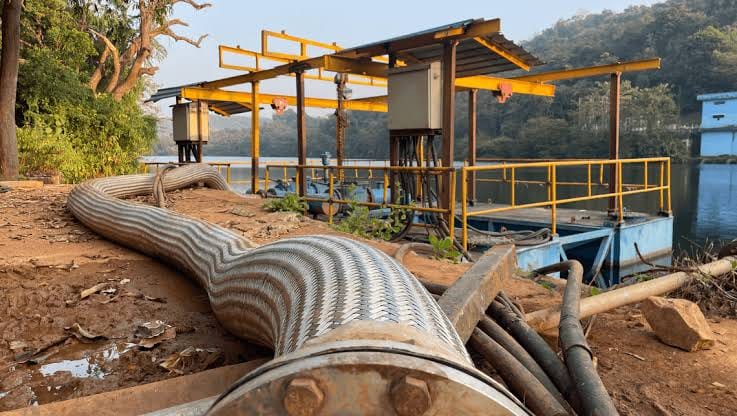
As part of its strategy to meet future demand, the government is planning a substantial expansion of water treatment infrastructure. Goa currently has treatment capacity of about 677 MLD, which is proposed to rise to more than 1,000 MLD through new facilities, capacity enhancement and associated works.
The government’s proposed distribution reforms include comprehensive GIS mapping of pipelines, hydraulic modelling and pressure management. The system is also expected to be reorganised around district metering areas (DMAs) to allow closer monitoring of water flows and losses.
Other measures include 100 per cent consumer metering, equitable distribution, systematic reduction of non-revenue water, telescopic tariffs and key performance indicator-based monitoring.
Pipeline modernisation is another major component of the programme. The department has been replacing older asbestos cement, cast iron and galvanised iron lines, which have contributed to repeated leakage and pipeline bursts.
Around 973 km of pipelines have been laid or replaced during the past four to five years. The government has set a target of replacing the remaining ageing pipelines over the next three to seven years.
Despite these efforts, the government does not yet have an exact figure for the quantity of water lost specifically through leakage, theft and other causes over the past five years.
According to Dessai, water losses can result from several factors, including corrosion and deterioration of old pipelines, defective joints, excessive or fluctuating pressure, construction damage, overflowing reservoirs, leaking service connections and illegal tapping.
The proposed overhaul is being planned against a backdrop of increasing pressure on Goa’s water resources due to population growth, urbanisation, tourism and industrial activity.
Although the government has said its infrastructure planning is intended to address long-term requirements, the Assembly reply did not spell out specific projections for the State’s water demand in 2037 and 2047.
The government expects the combination of higher treatment capacity, modern distribution management and infrastructure replacement to gradually close existing gaps and pave the way for reliable and uninterrupted water supply throughout Goa.