Team Goemkarponn
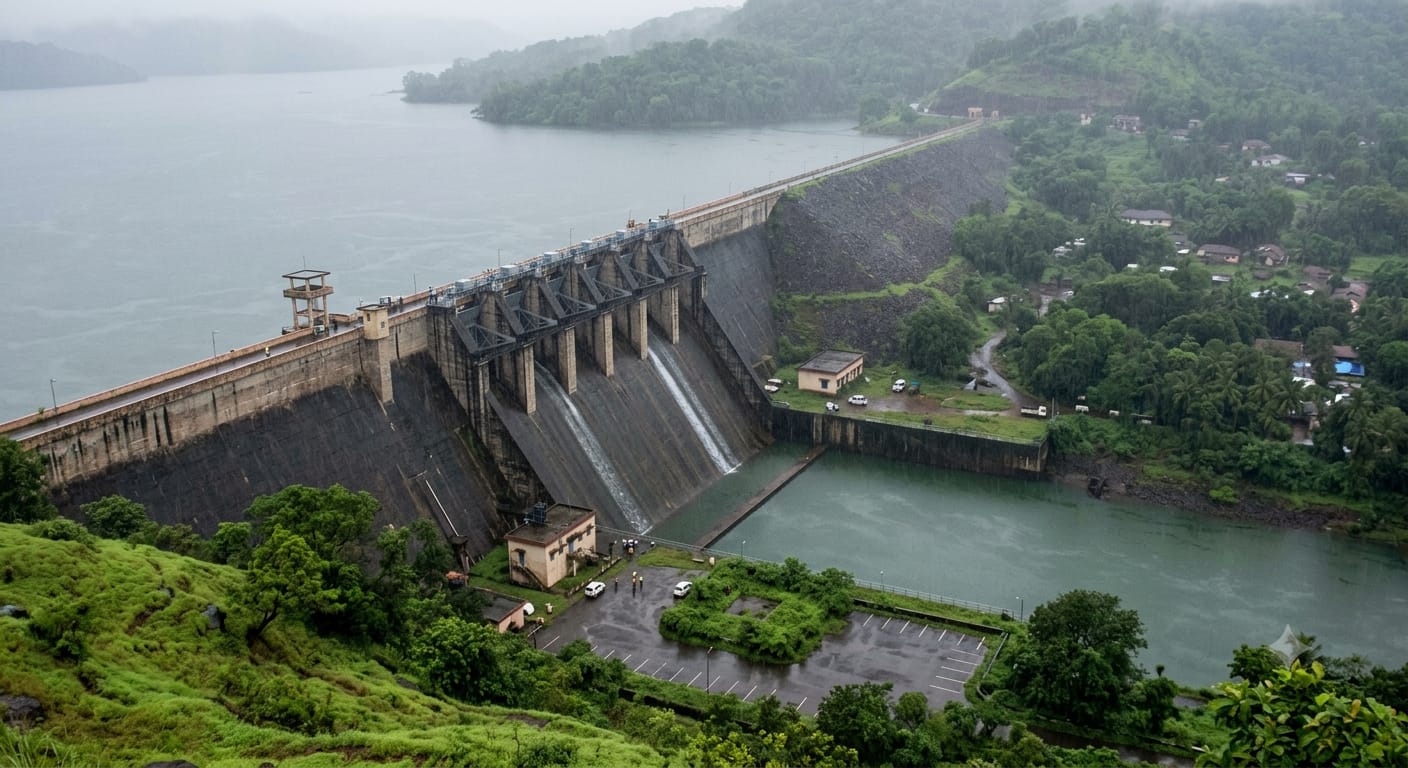
PANAJI: Goa’s six specified dams may have been assessed as structurally sound, but a State dam safety report has highlighted major gaps in emergency preparedness and monitoring infrastructure.
The Goa State Dam Safety Organisation’s Annual Report for 2025-26, prepared under the Dam Safety Act, 2021, states that none of the six specified dams had an operational Emergency Action Plan as of March 31, 2026.
The report also found that emergency flood-warning mechanisms and hydro-meteorological networks capable of forecasting inflows were not in place. No mock drills, tabletop exercises, community awareness programmes or coordination meetings with stakeholders were conducted during the year.
The six dams covered under the report are Selaulim, Anjunem, Amthane, Chapoli, Gavanem and Mhaisal at Panchawadi. Selaulim is classified as a major dam, Anjunem as a medium dam, while the other four are categorised as minor irrigation tanks.
A rapid risk assessment carried out for all six dams identified Selaulim as having the largest downstream population at risk, estimated at 36,427 people. Anjunem follows with 11,574, while the corresponding figures are 1,311 for Chapoli, 648 for Mhaisal, 105 for Amthane and 29 for Gavanem.
The assessment considers potential dam-failure scenarios and their possible consequences downstream, including the number of people who could be affected.
Despite the risk screening being completed, the State had not started a Comprehensive Dam Safety Evaluation for any of the six dams by March 31, 2026. An expert panel was constituted for the dams, but the report notes that no evaluation report had been completed or was underway.
Hazard-potential classification for the six dams was also yet to be completed.
Dam-break analysis and preparation of Emergency Action Plans for Selaulim and Anjunem have been assigned to the National Institute of Hydrology, Roorkee. IIT-Roorkee has been tasked with undertaking similar work for Amthane, Mhaisal, Chapoli and Gavanem.
The institute has also been assigned the preparation of operation and maintenance manuals for all six dams.
The report has raised concerns over the absence of dam instrumentation. All six dams were recorded as having no instrumentation that fully complied with the prescribed regulations and was functioning.
Such systems are used to track parameters including seepage, deformation and uplift pressure, which can help identify changes in dam behaviour and provide early warning of potential safety concerns.
The State Dam Safety Organisation has pointed to the absence of dedicated funding for instrumentation, inspections, emergency preparedness and maintenance as one of the hurdles in implementing the Dam Safety Act effectively.
It has recommended establishing a real-time monitoring mechanism that integrates dam instrumentation. It has also proposed a centrally sponsored funding arrangement with annual allocations for dam monitoring, inspections, emergency preparedness and maintenance.
Despite the shortcomings, all six dams underwent pre- and post-monsoon inspections during 2025-26 and were placed in Category III, with their overall structural condition described as “sound and safe”.
The report also records that no dam failure or dam-related incident was reported in Goa during the financial year.
Nearly ₹7.66 crore was spent on dam repairs and maintenance during 2025-26.