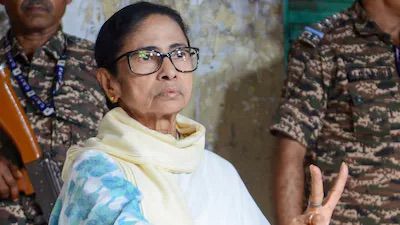
New Delhi: A political and constitutional standoff has unfolded in West Bengal after Chief Minister Mamata Banerjee refused to step down despite her party losing the 2026 Assembly elections. Her decision has raised serious questions about the next course of action, with attention now turning to the Governor and potential judicial intervention.
Banerjee, whose All India Trinamool Congress secured only 80 seats, rejected the outcome that gave the Bharatiya Janata Party a decisive 207 seats in the 294 member Assembly. She alleged irregularities in the electoral process and claimed the mandate was influenced by unfair practices. Maintaining that she has not lost, she has declined to submit her resignation.
The situation has no clear precedent, but constitutional conventions provide some guidance. While there is no explicit legal requirement for a chief minister to resign after losing an election, the principle of majority support in the legislative assembly remains central. Once results indicate a loss of majority, the expectation is that the chief minister steps down to allow a smooth transfer of power.
In the current scenario, the role of the Governor becomes crucial. Under Article 164(1) of the Constitution of India, the chief minister holds office at the Governor’s discretion. The Governor may ask Banerjee to prove her majority on the floor of the House. If she fails to do so, the Governor can invite the leader of the majority party to form the government.
Another option, though considered extreme, is the imposition of President’s Rule, which would place the state under central administration. However, this step is typically used only when no viable government can be formed.
With the Assembly’s term nearing its end, the window to resolve the crisis is narrow. The coming days are expected to determine whether the issue is settled politically, constitutionally, or through judicial intervention.