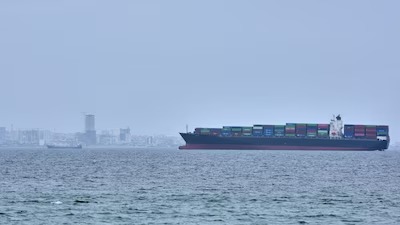
New Delhi: Iran has significantly tightened its control over the strategically important Strait of Hormuz by introducing a new regulatory system for commercial shipping through the establishment of the Persian Gulf Strait Authority (PGSA).
Under the new framework, all commercial vessels entering the Strait are required to follow an extensive reporting procedure before being allowed passage. Shipping operators must reportedly submit detailed information about cargo, vessel ownership, crew nationalities, identification numbers, and even previous names used by ships.
Iranian authorities have warned that vessels failing to comply with the new procedures could face severe consequences, including seizure by naval forces, drone attacks, or missile strikes. The move marks a major shift in how Tehran is asserting authority over one of the world’s most critical energy trade routes.
The new system is seen as part of Iran’s broader effort to establish stronger regional control following the escalation of tensions and conflict earlier in 2026. Previously, the Strait operated under internationally recognised transit passage rules, allowing free movement for global shipping.
Alongside tighter security regulations, reports suggest that Iran has also begun demanding large transit payments from commercial shippers in exchange for safe passage. Some shipping companies are reportedly being asked to pay as much as two million dollars per vessel.
The development has created serious complications for international shipping companies, particularly after the United States prohibited American individuals and financial institutions from making such payments, arguing that the funds could directly benefit the Islamic Revolutionary Guard Corps.
The tightening control over the Strait has already disrupted global trade and energy markets. Before the recent crisis, around 120 vessels crossed the Strait daily. That number has reportedly dropped sharply to nearly 40 crossings per day.
The reduced traffic has triggered concerns over global oil supply chains and rising fuel prices worldwide. Several countries, including India and Pakistan, are reportedly holding separate negotiations with Tehran to secure passage for their commercial fleets as uncertainty continues to grow across international shipping routes.
Sorry, there was a YouTube error.