Team Goemkarponn
CHICALIM: Chief Minister Dr Pramod Sawant on Friday said the revival of Goa’s traditional Kunbi art is vital to preserving the State’s cultural identity, while stressing the need to turn the heritage craft into a sustainable source of livelihood.
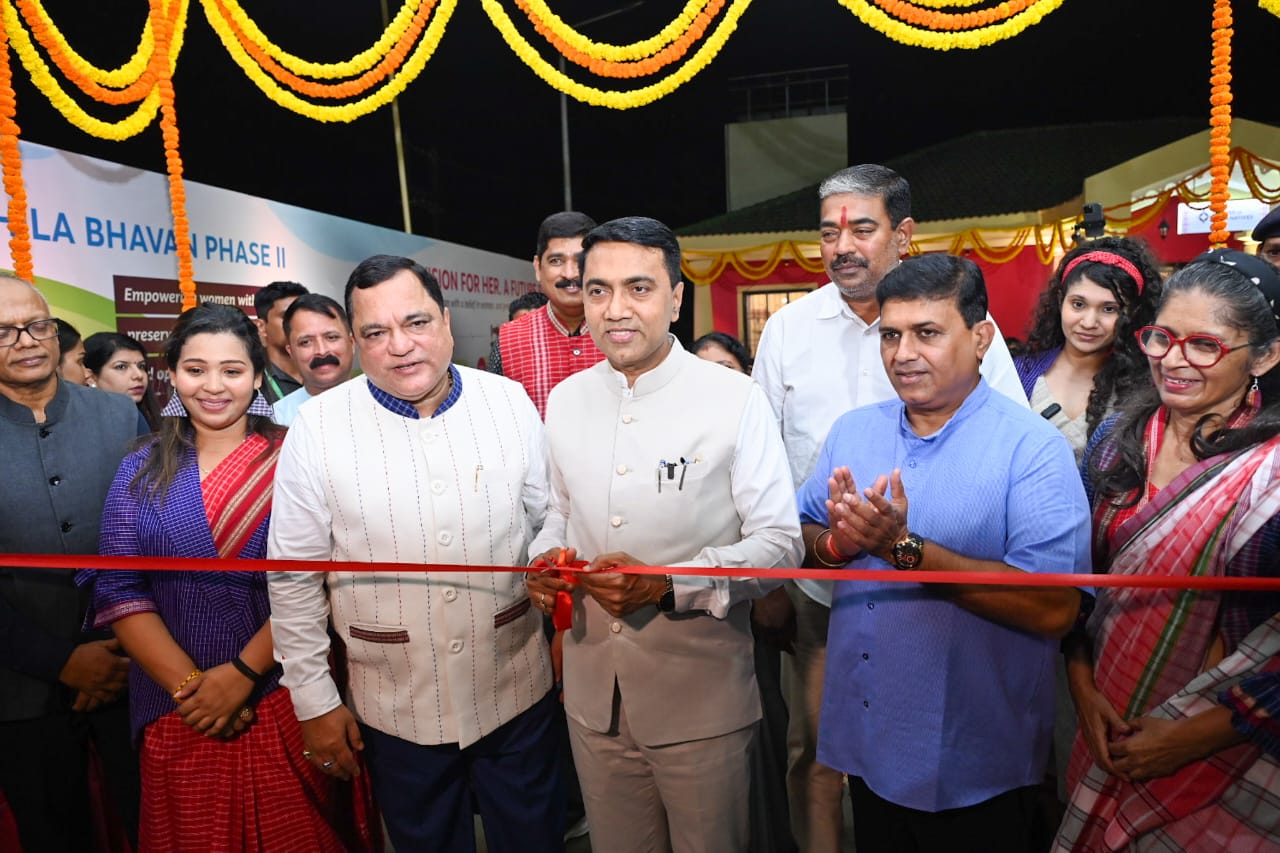
Sawant was speaking after inaugurating the ‘Weaves of Goan Natives’ initiative and the Mahila Resource Centre at Joggers Park, Chicalim, in the Dabolim constituency. The initiative aims to revive Kunbi weaving while creating opportunities for women through skill development, production and employment.
“The main concept was reviving the Kunbi. I am very happy to see an international-standard designer reviving Kunbi saris and other items related to Kunbi art and the Goan Kunbi tradition,” Sawant said.
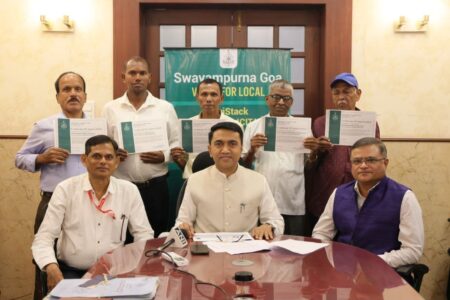
He said the government had been supporting Kunbi art for the past eight years as part of its efforts to promote traditional skills and self-reliance under the Swayampurna Goa vision.
Sawant also congratulated designer Verma D’Mello and Chicalim Panchayat Deputy Sarpanch Aishwarya Korgaonkar for taking the initiative forward and creating a platform for women to participate in the revival and production of Kunbi products.
During his visit, the Chief Minister inspected the workshop and production unit and interacted with women involved in colouring, designing and manufacturing Kunbi saris and other products.
The initiative is also looking to take Kunbi designs beyond traditional saris, with motifs and patterns being incorporated into dresses and other contemporary products to make the craft more relevant to modern markets.
Dabolim MLA and Panchayats Minister Mauvin Godinho said the initiative seeks to reconnect the younger generation with one of Goa’s traditional art forms while creating economic opportunities for women.
“Our Kunbi brothers and sisters created beautiful fabrics which are today known as Kunbi art. We wanted to bring this tradition back and give it a new lease of life,” Godinho said.
He said the Mahila Resource Centre was established to equip women with practical skills and help them become financially independent. The first phase aims to create employment opportunities for 100 women, with 75 already engaged in the initiative.
Women will be trained in stitching and undertake orders for school uniforms, children’s clothing and other garments. The centre will also explore work-from-home opportunities as the range of skills and orders expands, allowing more women to participate without leaving their homes.
Godinho said the shed and stitching machines had been arranged through corporate social responsibility support and his personal contribution. He said the initiative was conceived on a “no-profit, no-loss” basis, with the primary objective of helping women generate independent incomes.
He also announced plans for a larger youth empowerment shed in collaboration with the Confederation of Indian Industry (CII). The proposed facility will focus on skill development and training, with trained youth to be connected with employment opportunities in hotels and companies.
Godinho said such initiatives would help strengthen traditional skills while creating livelihood opportunities for women and youth and advancing the goal of self-reliance within the constituency.