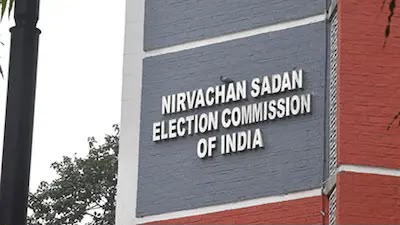
New Delhi: The Election Commission of India (ECI) has rejected allegations of large scale vote discrepancies and possible rigging in the 2024 Haryana Assembly and Maharashtra elections, stating that the claims are based on a misinterpretation of official election data.
Addressing allegations of major gaps between votes polled and votes counted, the Commission clarified that several widely circulated figures referred to the total number of registered electors rather than the actual number of people who cast their votes.
In Haryana, the Badkhal Assembly constituency became a major point of discussion after claims suggested that 3.32 lakh votes had been polled but only around 1.58 lakh were counted. However, official records show that the constituency had 3,32,253 registered electors, of whom 1,60,553 actually voted, recording a turnout of 48.32 per cent. After accounting for rejected ballots and NOTA votes, 1,58,475 valid votes were recorded.
Similar clarifications were provided for Ellenabad, Gurgaon, Badshahpur and Kalka. Their official figures show that the number of valid votes corresponds with the actual turnout after accounting for rejected postal ballots and NOTA.
A similar controversy emerged over Mumbai North parliamentary constituency in Maharashtra, where claims suggested that 18.11 lakh votes were polled but only 10.33 lakh were counted, leaving 7.78 lakh votes unaccounted for.
The Commission clarified that 18.12 lakh was the total number of registered electors in the constituency, while approximately 10.33 lakh actually voted, representing a turnout of around 57 per cent. The valid vote count matched the actual votes polled after routine deductions.
Across Haryana, 2.04 crore electors were registered, while 1.39 crore exercised their voting rights, resulting in a turnout of 67.99 per cent.
The Commission maintained that minor differences between votes polled and valid votes are normal due to rejected postal ballots, NOTA and other legally recognised factors. It also emphasised that Form 17C and authenticated election returns remain the primary records for verifying voting figures.
The clarification comes amid continuing political debate over electoral transparency and allegations of irregularities in the 2024 elections.