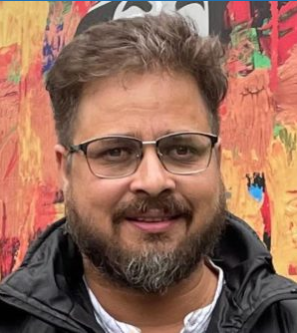
“Nobody forced Pratima Coutinho to leave the Congress. The decision to join the Aam Aadmi Party was her own. It was a calculated political move made at a time when Congress was already battling internal challenges, defections and organisational instability. Whether the decision was driven by ideology, ambition, or political opportunity is for political observers to judge. What is clear, however, is that it was a conscious choice.
Today, years later, the focus appears to be on why her return to Congress was delayed. But that discussion conveniently overlooks the fact that it was her departure that created the situation in the first place.”
Pratima Coutinho’s recent remarks questioning Goa Pradesh Congress Committee president Amit Patkar over the delay in facilitating her return to the Congress raise an important political question. But before demanding answers from Patkar, perhaps a more fundamental question deserves to be asked: why should the burden of explanation rest solely on the party leadership when it was she who chose to leave the Congress in the first place?
Political loyalty is not a one-way street. It comes with responsibilities, commitments and consequences. When leaders voluntarily walk away from a political party, especially during difficult times, they cannot reasonably expect an automatic welcome back whenever circumstances change.
Nobody forced Pratima Coutinho to leave the Congress. The decision to join the Aam Aadmi Party was her own. It was a calculated political move made at a time when Congress was already battling internal challenges, defections and organisational instability. Whether the decision was driven by ideology, ambition, or political opportunity is for political observers to judge. What is clear, however, is that it was a conscious choice.
Today, years later, the focus appears to be on why her return to Congress was delayed. But that discussion conveniently overlooks the fact that it was her departure that created the situation in the first place.
Every political action carries consequences. Those who leave a party cannot simply erase the impact of that decision when they seek to return. There are workers who remained loyal to the Congress through some of its most difficult phases. They stood by the party despite electoral setbacks, repeated defections and organisational uncertainty. Their commitment matters too.
Any party leadership has a responsibility not only to accommodate returning leaders but also to protect the morale and confidence of those who never left.
This is where criticism of Amit Patkar appears somewhat unfair.
There are many valid debates that can be had about Patkar’s leadership. Congress continues to face serious political challenges in Goa, and leadership performance will always remain open to scrutiny. However, exercising caution before readmitting leaders who previously abandoned the party should not automatically be viewed as a mistake.
Patkar inherited a party deeply scarred by defections. The defection of eight Congress MLAs to the BJP remains one of the most damaging political episodes in the party’s recent history. It weakened the organisation, demoralised workers and created widespread distrust about political loyalty.
In such an environment, it is understandable that the party leadership would carefully evaluate the return of leaders who had previously left.
Any responsible organisation would ask legitimate questions. Will the individual remain committed during future challenges? Has their political outlook genuinely changed? Are they returning because they believe in the party’s ideology or because their previous political choices did not work out as expected?
These are not questions of personal hostility. They are questions of organisational survival.
What also deserves attention is the narrative that surrounded Pratima Coutinho’s departure from Congress. At various stages, blame was directed at several senior Congress leaders, including Luizinho Faleiro, Girish Chodankar and Digambar Kamat. Strong criticism was levelled against the party’s leadership and functioning.
Yet today, many of the same structures and personalities remain associated with the Congress organisation. Girish Chodankar, for instance, continues to play an important role in the party.
This naturally raises another question. If the leaders and systems that were once criticised so strongly are now acceptable enough to warrant a return, then were the earlier accusations really about ideology and principles, or were they products of political frustration and personal disagreements?
That is a question only Pratima Coutinho can answer.
To be clear, political parties should always remain open to reconciliation. People change, political circumstances evolve and second chances are part of democratic politics. Congress has every right to accept back leaders if it believes they can contribute positively to the organisation.
But reconciliation should never be mistaken for entitlement.
Returning to a party after leaving it is not a right. It is a privilege that depends on rebuilding trust. Trust takes time. It cannot be demanded. It must be earned.
Therefore, before asking why Amit Patkar did not facilitate her return sooner, Pratima Coutinho should perhaps first explain why she felt the need to leave the Congress at all. The answer to that question may reveal far more about the situation than any explanation Patkar could ever provide.
In politics, loyalty is tested not when things are easy but when they are difficult. Those who stayed the course during Congress’ toughest years deserve at least as much consideration as those who chose to leave and later decided to return.