


“Political parties do face internal conflicts. That is neither unusual nor shocking. Every organisation has ideological disagreements, personality clashes and power struggles. Mature political leadership handles these disputes internally through party mechanisms, dialogue and discipline. Once leaders begin fighting publicly, especially through emotional social media exchanges, the damage goes far beyond personal reputations. It weakens the institution itself.
Parab may genuinely feel betrayed by some within the organisation. He may believe there was sabotage, factionalism or attempts to weaken his authority. Some of those concerns may even be valid. But leadership is tested not during moments of unity, but during moments of crisis. And leadership also demands restraint.”
The Revolutionary Goans Party was born out of frustration. Frustration against national parties, against political opportunism, against what many Goans saw as the systematic sidelining of local voices and identity. The party positioned itself as a clean, fearless and uncompromising regional force that would challenge the political establishment and speak directly for Goans.
That is why the present spectacle unfolding within the RGP is not merely an internal party matter. It is rapidly becoming a public collapse of credibility.
Over the last few weeks, Goa has witnessed a disturbing trend. Social media posts, public accusations, emotional outbursts, allegations of sabotage, religious divisions, internal conspiracies and even references to alleged bribe accusations have all spilled into the open. Instead of political messaging focused on governance, unemployment, land protection or regional issues, the RGP leadership appears consumed by internal warfare.
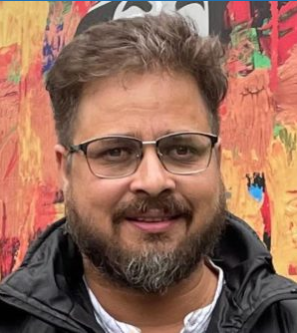
The biggest question emerging from this crisis is simple: why is party president Manoj Parab washing dirty linen in public?
Political parties do face internal conflicts. That is neither unusual nor shocking. Every organisation has ideological disagreements, personality clashes and power struggles. Mature political leadership handles these disputes internally through party mechanisms, dialogue and discipline. Once leaders begin fighting publicly, especially through emotional social media exchanges, the damage goes far beyond personal reputations. It weakens the institution itself.
Parab may genuinely feel betrayed by some within the organisation. He may believe there was sabotage, factionalism or attempts to weaken his authority. Some of those concerns may even be valid. But leadership is tested not during moments of unity, but during moments of crisis. And leadership also demands restraint.
When a party president publicly says he “cried” before an MLA begging him not to divide the party, it may reflect emotional honesty. But politically, it signals instability. Voters do not look at such statements and feel reassured. They begin questioning whether the party is capable of governing itself, let alone governing a state.
The RGP today risks appearing less like a political movement and more like a fractured organisation trapped in ego battles.
What makes the situation worse is the contradiction between the party’s public messaging and internal behaviour. On one hand, RGP leaders are claiming the party is united and fully prepared for the 2027 Assembly elections. On the other hand, show cause notices are flying, leaders are accusing each other of anti-party activities and allegations of parallel power centres are openly discussed before cameras.
One cannot claim unity while simultaneously conducting a public trial of party colleagues.
The danger for the RGP is deeper than temporary embarrassment. The party was built around emotion, identity and anti-establishment energy. Such movements survive only as long as people believe they are morally different from traditional parties. The moment they begin resembling the same power struggles, factionalism and public mudslinging they once criticised, supporters begin disconnecting emotionally.
And Goa’s voters are politically observant. They may forgive ideological shifts. They rarely forgive instability.
The bigger irony is that the RGP currently has a political opportunity. Public dissatisfaction over unemployment, land issues, infrastructure strain and governance concerns continues to exist. Regional politics in Goa still has space. But instead of capitalising on those issues, the party leadership appears distracted by internal score-settling.
Social media has amplified the damage further.
Political leaders often forget that every internal accusation posted publicly becomes permanent political ammunition for opponents. Every allegation of sabotage, communal division or financial accusation weakens the party’s moral authority. Rival parties do not need to attack the RGP when its own leaders are already doing the job publicly.
If Manoj Parab believes there are genuine attempts to destabilise the organisation, he has every right to act firmly. But there is a difference between asserting authority and publicly unravelling the party’s internal fabric.
The RGP still has time to recover, but only if its leadership understands one reality quickly: movements collapse faster from internal implosions than external attacks.
Goans who once saw the RGP as a disciplined regional alternative are now watching confusion, emotional breakdowns and public factionalism. The longer this continues, the harder it will become for the party to convince voters that it represents a serious political future rather than a divided protest platform struggling to hold itself together.
