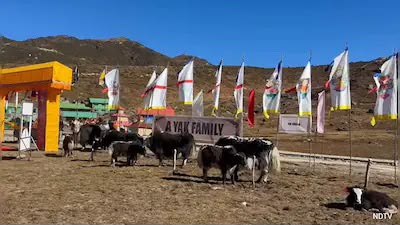
New Delhi: The remote Himalayan village of Gnathang in eastern Sikkim recently hosted the state’s first Yak Festival, bringing together herders from across the region to discuss the future of an occupation deeply rooted in mountain communities. Located at an altitude of around 13,500 feet near the India-China border, the village provided a setting to highlight both the importance of yak rearing and the challenges threatening its survival.
Herders from Sikkim, Arunachal Pradesh and Ladakh participated in the gathering. Discussions focused on shrinking grazing grounds, unpredictable weather, conservation concerns and declining interest among younger generations in continuing the traditional occupation.
Holding the festival in a border village also reflected the Centre’s efforts to strengthen remote settlements through the Vibrant Villages Programme. The initiative aims to improve infrastructure, encourage tourism and create livelihood opportunities in villages along the international boundary, helping residents remain in strategically important areas.
Cultural events such as the Yak Festival are expected to attract visitors while promoting local traditions and products. Yak milk, dairy products and fibre could also offer additional income opportunities for herding families.
However, participants stressed that protecting the traditional occupation remains the biggest priority. Around 400 to 500 yaks were brought to the festival, while stalls showcased yak-based products and traditional practices.
Herders highlighted how changing weather patterns have disrupted seasonal grazing routines. Unexpected snowfall and untimely rainfall often make it difficult to move animals between pastures. Conservation concerns have also increased as natural grasslands continue to deteriorate.
Officials estimated that nearly 40 per cent of grasslands had been lost or affected, reducing the availability of grazing areas. The growing preference among educated young people for alternative professions has further weakened the traditional workforce.
Participants called for improved pasture management, scientific research and better processing and marketing of yak products to make herding financially sustainable.
The need for cooperation among Himalayan regions also emerged as an important theme. Representatives from Sikkim, Arunachal Pradesh, Himachal Pradesh and Ladakh stressed the importance of coordinated conservation efforts. There were also suggestions to involve Nepal and Bhutan in a wider Himalayan yak federation.
Organisers hope the inaugural festival will become an annual event, bringing greater attention to yak conservation, traditional livelihoods and the economic potential of remote Himalayan communities.