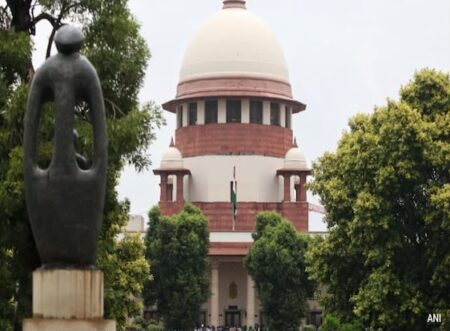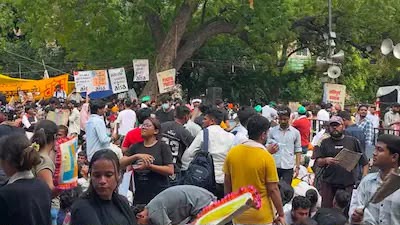
New Delhi: The Supreme Court on Tuesday observed that no individual or organisation can occupy a designated protest site indefinitely, stressing that even locations permitted for demonstrations must have a clearly defined time limit.
The observations came during a hearing on the large-scale protest held at Jantar Mantar in central Delhi last month and a subsequent demonstration at Ramlila Maidan organised by Opposition parties and other groups against the Election Commission of India.
Chief Justice of India Surya Kant, heading a bench that also included Justices Joymalya Bagchi and V. Mohana, emphasised that protest sites must remain accessible to everyone and cannot be occupied permanently by a particular group.
“You cannot occupy a site for all times to come. There are other protesters also. Where will farmers or lawyers go? Everyone has a right to protest,” the Chief Justice observed.
The court was hearing petitions, including one filed by trader organisations seeking restrictions on protests during the festive season due to their impact on commercial activities.
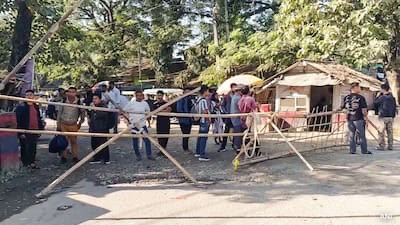
Solicitor General Tushar Mehta argued that organisers calling for demonstrations must take responsibility for the consequences of their actions. He informed the bench that permission for the July 20 protest had been granted for only one day, but demonstrators continued occupying the location and marched towards Parliament.
He stressed that Parliament and the Supreme Court could not be treated as ordinary political buildings where protesters could march.
The petitions also raised concerns over alleged mass detentions, police action, the closure of metro stations and internet shutdowns.
The bench asked trader organisations to include the political parties that organised the anti-Chief Election Commissioner protest in their petition concerning business losses.
Trader representatives highlighted that around 50 lakh people lived near the protest location and claimed that commercial establishments remained shut, severely affecting business in areas including Connaught Place.
The court’s observations highlighted the need to maintain a balance between the constitutional right to peaceful protest and the rights of ordinary citizens to conduct business and earn their livelihoods.