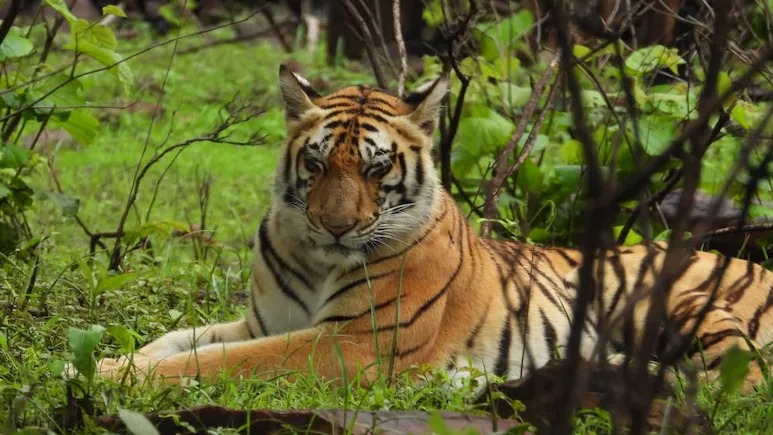
New Delhi: Madhya Pradesh’s success in wildlife conservation is facing a serious challenge as encounters between people and wild animals continue to claim lives on both sides. In the first eight months of 2026, at least 50 people have died in wild animal attacks across the state, while more than 45 tigers have also died during roughly the same period.
Tigers have been responsible for the highest number of human fatalities. Of the 50 deaths, 22 were caused by tiger attacks. Wild boars accounted for eight deaths, elephants seven, sloth bears four and leopards one. Women and girls made up at least 16 of the victims.
The conflict peaked during March, April and May, when 30 people were killed. These months coincide with increased movement of villagers and tribal communities into forest areas to collect tendu leaves and mahua flowers, increasing the chances of dangerous encounters.
Seoni and surrounding areas in the Mahakoshal region recorded a particularly high number of tiger attacks, with 14 of the 22 tiger related deaths reported there. Another seven occurred around Bandhavgarh Tiger Reserve and nearby areas.
The crisis extends beyond tigers. Elephant attacks have been concentrated in eastern districts such as Anuppur, Sidhi and Shahdol, where elephants increasingly move across from neighbouring Chhattisgarh. Sloth bear attacks have also claimed lives in the region.
The scale of the problem is not new. Madhya Pradesh recorded 406 human deaths from wild animal attacks between 2020-21 and 2024-25, along with more than 5,800 injuries and over 72,000 cases of livestock loss. The government paid more than Rs 88 crore in compensation during that period.
At the heart of the crisis is an increasingly crowded landscape. Madhya Pradesh has India’s largest tiger and leopard populations, but forests and wildlife corridors are increasingly intersected by villages, farms, roads and railway lines. Young tigers leaving established territories often travel through human dominated areas in search of new habitats.
At the same time, the state’s tiger population has continued to rise, reaching 785 in the 2022 national estimation and now approaching 1,000 according to current estimates. The increase is a major conservation achievement, but it also places greater pressure on available habitats.
Tiger deaths add another dimension to the crisis. More than 45 tigers have died in the state this year, with causes ranging from natural mortality and territorial fights to accidents, electrocution, poisoning and suspected poaching.
Madhya Pradesh is therefore confronting a difficult conservation paradox. Protecting wildlife has helped populations recover, but ensuring that animals and communities can coexist safely is becoming increasingly urgent. Without stronger wildlife corridors, safer forest access and better conflict prevention, the success of tiger conservation could continue to come with a heavy human and ecological cost.